2026 Best Metal Grating Types for Global Buyers

Time:2026-09-18 Author:Charlotte
0%

Global buyers are reassessing Metal Grating as infrastructure projects demand safer access, longer service life, and lower maintenance costs. The choice now extends beyond steel versus aluminum. Load class, span, opening size, surface treatment, drainage, and installation conditions can change total value.

Grand View Research reports continued growth in the global metal grating market, supported by construction, energy, manufacturing, and transportation investment. Fortune Business Insights also identifies industrial expansion and infrastructure renewal as important market drivers. However, reported market values vary between studies. Their definitions, regions, and product categories are not identical. Buyers should examine the methodology before trusting any forecast.

“Grating selection must begin with the load, span, and environment, not the lowest quotation,” says Michael J. O’Brien, a senior structural engineer and longtime industrial flooring consultant. This practical warning remains relevant. A galvanized steel panel may suit a dry factory walkway, while stainless steel or aluminum may perform better near saltwater, chemicals, or food-processing equipment. Small details matter. Serrated surfaces improve traction, but they can complicate cleaning and wheelchair movement. Narrow openings protect tools and footwear, yet may reduce drainage speed.

This guide compares the 2026 best Metal Grating types for global buyers. It considers safety, corrosion resistance, fabrication accuracy, compliance documentation, and lifecycle cost. No single product wins everywhere. Weather, worker traffic, local standards, and maintenance habits can overturn a simple ranking. That uncertainty deserves attention. Reliable procurement still requires verified drawings, material certificates, load tables, and samples before shipment.

2026 Best Metal Grating Types for Global Buyers

Metal Grating Basics and Key Features for Global Buyers

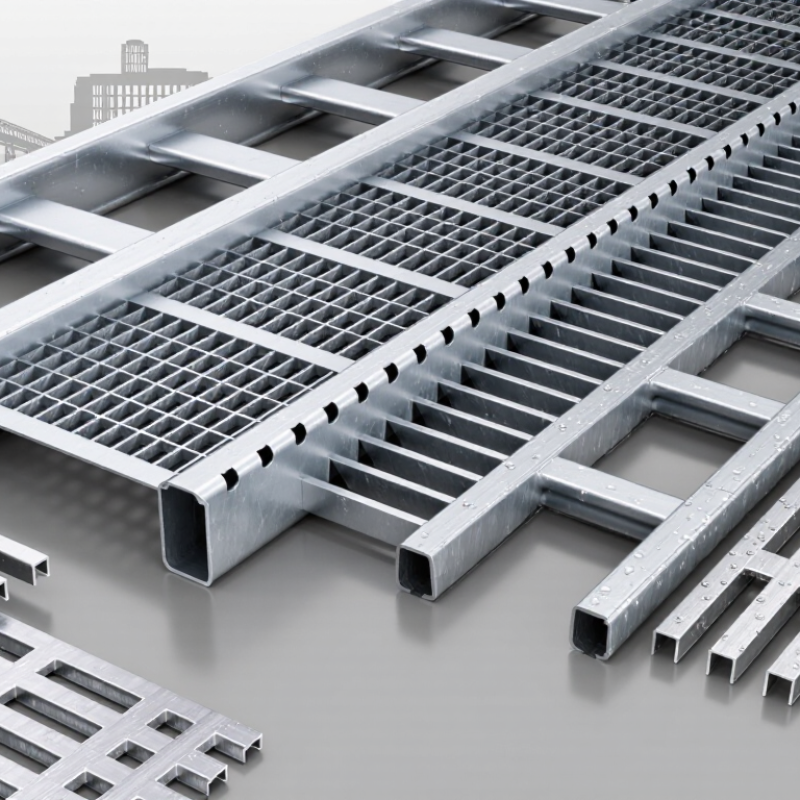
Metal grating is a load-bearing surface made from parallel bearing bars and connecting cross bars. It supports foot traffic, platforms, stairs, drainage covers, and maintenance walkways.

Common types include welded steel, press-locked steel, aluminum, and stainless steel grating. Welded steel offers strong support for industrial floors and heavy equipment areas. Aluminum reduces weight and resists corrosion in many outdoor applications. Stainless steel performs well where hygiene, moisture, or chemical exposure demands better protection. Serrated bearing bars can improve slip resistance, especially around water or oil.

Key features deserve careful comparison. Check bearing-bar depth, spacing, panel dimensions, surface finish, load capacity, and fixing methods. A galvanized finish may protect carbon steel, but coating quality and local exposure still matter. Buyers should request test data, material certificates, and drawings before placing an international order. Requirements can differ between countries and project authorities.

Measure twice. A catalog image can mislead.

In practice, installation errors often cause avoidable movement or noise. One overlooked support gap may weaken an otherwise suitable panel. I have found that buyers sometimes focus on price before checking deflection limits and delivery packaging. That choice can create higher site costs later. Confirm the span, traffic pattern, drainage needs, and maintenance conditions with a qualified engineer. Then compare samples under realistic handling conditions, not only on a clean showroom floor.

2026 Best Metal Grating Types for Global Buyers - Metal Grating Basics and Key Features for Global Buyers
Metal Grating Type Typical Material Options Manufacturing Method Typical Surface Options Main Strengths Key Considerations Recommended Applications Common Reference Standards
Welded Steel Bar Grating Carbon steel
Low-alloy steel
Bearing bars are resistance-welded to cross bars, producing a rigid load-bearing panel. Plain steel Painted Hot-dip galvanized High load-carrying capability; rigid construction; widely available; suitable for industrial platforms and walkways. Unprotected carbon steel can corrode. Bearing-bar depth, thickness, span, and support conditions must be checked for each project. Factory platforms, plant walkways, stair treads, drainage covers, equipment platforms, and maintenance areas. ANSI/NAAMM MBG 531; ASTM A36 or equivalent structural steel specifications; ISO 1461 or ASTM A123 for hot-dip galvanizing.
Press-Locked Steel Grating Carbon steel
Stainless steel
Aluminum
Cross bars are forced into pre-punched or preformed slots in the bearing bars and mechanically locked. Mill finish Painted Galvanized Clean visual appearance; closely controlled openings; useful where a flush, uniform top surface is desired. Mechanical interlock strength and panel deflection must be verified for heavy or impact loading. Corrosion protection depends on the material and finish. Architectural floors, ventilation screens, light industrial walkways, mezzanines, and interior platforms. ANSI/NAAMM MBG 531; project-specific structural and accessibility requirements.
Riveted Steel Grating Carbon steel
Stainless steel
Cross bars are connected to bearing bars using riveted joints, generally creating a strong and relatively flexible panel. Painted Hot-dip galvanized Stainless finish Good resistance to vibration and repeated service loads; suitable for demanding industrial environments. Usually heavier and more costly than standard welded grating. Rivet condition and corrosion protection require inspection. Heavy-duty walkways, vibrating equipment areas, power facilities, bridges, and industrial maintenance platforms. ANSI/NAAMM MBG 531 and applicable structural design codes.
Swage-Locked Aluminum Grating Aluminum alloys such as 6061-T6 or 6063, subject to the supplier’s verified temper and design. Aluminum cross bars are mechanically swaged into bearing bars to form a lightweight panel. Mill finish Anodized Powder coated Low weight; good atmospheric corrosion resistance; easier handling and installation than steel grating. Lower stiffness and strength than comparable steel sections. Avoid direct contact with incompatible metals where galvanic corrosion is possible. Marine facilities, wastewater plants, rooftops, lightweight platforms, transportation areas, and chemical-processing accessways. ANSI/NAAMM MBG 531; applicable aluminum alloy and structural design specifications.
Stainless Steel Bar Grating Type 304 stainless steel for general corrosion resistance
Type 316 stainless steel for chloride-rich or marine exposure
Commonly welded or press-locked, depending on the required load and appearance. Mill finish Pickled and passivated Polished Strong corrosion resistance; hygienic surface; long service life in many chemical, food, and marine environments. Higher initial material cost. The selected grade must match chloride concentration, chemicals, temperature, and cleaning conditions. Food-processing facilities, pharmaceutical areas, chemical plants, coastal platforms, water treatment, and hygienic drainage zones. ANSI/NAAMM MBG 531; ASTM A240 or equivalent stainless-steel material specifications; EN 10088 where applicable.
Heavy-Duty Press-Locked Grating Carbon steel
Stainless steel
Uses deeper and/or thicker bearing bars with mechanically locked cross bars for higher design loads. Plain Painted Galvanized Designed for concentrated loads, forklift traffic, maintenance vehicles, and demanding industrial service. Panel weight, support details, wheel loads, impact loads, and deflection limits must be engineered rather than selected only by mesh size. Loading bays, mining facilities, heavy manufacturing plants, transport terminals, and vehicle-access platforms. ANSI/NAAMM MBG 531; applicable national structural, live-load, and accessibility regulations.
Serrated Safety Grating Carbon steel
Aluminum
Stainless steel
Bearing-bar top surfaces are formed or machined with serrations to improve traction. Galvanized Mill finish Stainless finish Improved slip resistance in wet, oily, muddy, or icy conditions compared with plain-top grating. Serrations can be less comfortable for barefoot or low-clearance contact. Surface performance depends on geometry, contamination, footwear, and maintenance. Outdoor stairs, oil and gas facilities, wastewater plants, food-processing service areas, ramps, and wet platforms. ANSI/NAAMM MBG 531; EN ISO 14122-2 and applicable local safety requirements.
Expanded Metal Grating Carbon steel
Aluminum
Stainless steel
A single metal sheet is slit and stretched to create a continuous mesh without separate welded cross bars. Plain Painted Galvanized Anodized Continuous construction; good airflow and visibility; reduced waste during production; available in many mesh patterns. Load capacity depends strongly on sheet thickness, strand dimensions, mesh orientation, and support spacing. It is not automatically interchangeable with bar grating. Guards, screens, light-duty walkways, ventilation panels, platforms, ramps, and machine enclosures. ASTM F1267 for expanded metal products; project-specific structural and safety requirements.
Perforated Metal Floor Grating Carbon steel
Aluminum
Stainless steel
Holes are punched or otherwise formed in sheet metal, with the pattern selected for drainage, airflow, or appearance. Painted Galvanized Anodized Stainless finish Controlled open area; smooth and uniform appearance; useful where small openings or particle control are important. Open area, hole geometry, sheet thickness, and unsupported span determine drainage and load performance. Some patterns may clog more easily than bar grating. Walkways, machine covers, ventilation panels, equipment decks, raised floors, and architectural applications. ASTM B117 may be used for corrosion-testing programs; structural design and accessibility requirements must be specified for the project.
Buyer selection note: Load capacity is not determined by grating type alone. Confirm bearing-bar size, cross-bar spacing, clear span, support width, design load, concentrated load, deflection limit, opening size, slip resistance, corrosion environment, finish, and applicable local regulations before placing an order. The dimensions and performance values should be verified against the manufacturer’s engineered load tables for the specific project.

Main Types of Metal Grating and Their Structural Differences

2026 Best Metal Grating Types for Global Buyers

Main Types of Metal Grating and Their Structural Differences

Metal grating is not one uniform product. Its load path, opening shape, and joining method change performance.

Welded bar grating uses load-bearing bars welded to cross bars. It suits platforms, stairs, and industrial floors.

Press-locked grating forces cross bars into deep slots. Its clean surface helps drainage, but heavy impact may damage the joints.

Swage-locked grating forms twisted cross bars around bearing bars. This creates a rigid, visually consistent panel.

Expanded metal is cut and stretched from one sheet. It has no separate cross bars, so its structure remains continuous. It works well for screens, walkways, and lightweight guards.

Perforated metal uses punched holes in a sheet. It offers better containment, but usually provides less open drainage than bar grating.

Serrated bearing bars improve slip resistance, especially where oil or rain is present. Small details matter.

The World Steel Association reported about 1.89 billion tonnes of crude steel production in 2023. That scale supports broad material availability, but does not guarantee suitable quality.

Buyers should verify steel grade, zinc coating, weld quality, span tables, and declared loads.

ISO 14122-2 provides guidance for permanent access platforms and walkways, while local codes may set additional requirements.

Field inspections often find panels specified by appearance alone. That is a costly weakness.

Recheck deflection, support spacing, opening dimensions, and corrosion exposure before ordering.

Material Choices, Surface Finishes, and Load Ratings

2026 Best Metal Grating Types for Global Buyers

Material Choices, Surface Finishes, and Load Ratings

Material selection should follow the environment and load path, not only the purchase price. World Steel Association’s World Steel in Figures 2025 reports about 1.88 billion tonnes of crude steel production in 2024. This scale supports steel’s global availability, but carbon steel still needs corrosion protection. Stainless steel suits coastal, chemical, and hygienic areas. Aluminum reduces dead weight, although its lower stiffness can require deeper bearing bars. That trade-off is easy to underestimate.

Surface finish changes service life and maintenance. Hot-dip galvanizing remains practical for outdoor platforms and factory walkways. ASTM A123 specifies average zinc coating thicknesses from 45 to 85 micrometres, depending on steel thickness. Paint systems can improve color control, but damaged edges may expose bare steel quickly. Corrosion changes everything. In wet or salty air, specify drainage, sealed details, and a suitable coating system.

Load ratings must match span, bearing-bar size, panel width, and support conditions. NAAMM MBG 531-19 provides load tables for bar grating design, while EN ISO 14122-2 addresses access platforms and walkways. Buyers should request certified calculations, test documentation, and a stated deflection limit. A panel rated for 4 kPa may still fail a concentrated wheel load. That distinction matters. I have seen specifications focus on uniform loads and overlook maintenance carts. Recheck the real traffic pattern before ordering.

How to Select Metal Grating for Different Applications

2026 Best Metal Grating Types for Global Buyers

Selecting metal grating starts with the application, not the catalogue photograph.

For walkways, platforms, and maintenance floors, welded steel bar grating offers strong load capacity and consistent bearing bars. Press-locked grating provides a flatter surface for carts and small wheels. Expanded metal can suit lightweight guards, screens, and ventilation panels. Choose serrated surfaces where oil, rain, or process water creates slip risk. Wet sites need attention.

The World Steel Association reported 1.89 billion tonnes of crude steel production in 2023. This scale supports broad steel availability, but availability does not guarantee suitability. For outdoor projects, hot-dip galvanized steel commonly provides practical corrosion protection. ASTM A123/A123M specifies coating requirements for fabricated iron and steel products. Stainless steel is more appropriate near aggressive chemicals, salt spray, or strict hygiene controls. Yet its higher cost can be wasteful in a dry indoor plant.

Load selection requires real measurements.

Confirm span, bearing direction, pedestrian loads, equipment loads, and allowable deflection with a qualified engineer. ISO 14122-2 addresses permanent means of access and working platforms. In field inspections, missing support details cause more trouble than the grating pattern itself. A common mistake is choosing a heavier panel without checking frame connections. It looks safer. It may not be.

Ask for mill certificates, coating records, dimensional tolerances, and tested load tables. Local climate and installation skills also deserve review. No selection table replaces a site check.

Global Purchasing Standards, Quality Checks, and Supplier Evaluation

Global buyers should match metal grating types to load, environment, and maintenance access. Press-locked grating suits clean industrial floors, while welded bar grating handles heavier traffic and repeated impact. Serrated surfaces improve grip in wet areas, but they can collect dirt. That trade-off is easy to overlook.

Purchasing teams should request material certificates, heat numbers, dimensional drawings, and coating records. A practical inspection checks bearing-bar depth, crossbar spacing, panel squareness, weld continuity, and surface damage. For galvanized grating, verify coating requirements against ISO 1461 or ASTM A123, depending on the project specification. Measure coating thickness at several points, not only near the edge. The World Steel Association reported 1.882 billion tonnes of global crude steel production in 2024, showing the scale of the supply base, but volume does not prove consistency.

Supplier evaluation needs evidence beyond a polished website. ISO’s 2022 Survey recorded 1,265,216 ISO 9001 certificates worldwide, yet certification alone cannot confirm grating accuracy. Ask for recent inspection reports, nonconformance records, traceability procedures, and sample panels. Check whether the supplier explains rejected material openly. That matters. Factory audits should examine calibration records, welding controls, packing methods, and corrosion protection during shipment. I would also compare three samples under the same load conditions; catalogue language can sound precise, while actual panel flatness may vary. Prices deserve review, but an unusually low quotation may hide thinner bars, weaker welds, or incomplete documentation.

FAQS

What is metal grating used for?

Metal grating creates load-bearing surfaces for walkways, platforms, stairs, drainage covers, and maintenance floors. It supports people and equipment.

Which grating type suits heavy industrial areas?

Welded steel grating usually provides strong support for industrial floors and equipment zones. Check the actual span and load.

When is aluminum grating a practical choice?

Aluminum grating reduces weight and resists corrosion in many outdoor applications. It may suit access panels and lightweight platforms.

When should stainless steel grating be considered?

Stainless steel suits wet, hygienic, salty, or chemically exposed locations. Its higher cost may be unnecessary indoors.

How can buyers improve slip resistance?

Serrated bearing bars can improve grip around rain, oil, and process water. Wet sites need extra attention.

What measurements matter before ordering?

Confirm bearing-bar depth, spacing, panel size, span, support direction, and allowable deflection. Measure twice.

Is a galvanized finish enough for outdoor projects?

Galvanizing can protect carbon steel from corrosion, but coating quality and local exposure still matter. Coastal conditions may demand more protection.

What documents should international buyers request?

Request material certificates, coating records, drawings, dimensional tolerances, and tested load tables. Photographs are not enough.

What installation mistakes commonly cause problems?

Incorrect support gaps can create movement, noise, or weakness. Frame connections also need checking, not just panel weight.

How should buyers compare samples?

Handle samples under realistic conditions, including carts, moisture, and uneven support. A clean showroom floor can hide practical weaknesses.

Conclusion

This guide explains the essential features of Metal Grating and helps global buyers understand how different designs perform in demanding environments. It compares common types, including welded, press-locked, riveted, and molded structural grating, highlighting differences in load distribution, surface stability, drainage, ventilation, and installation. Buyers will also learn how material choices such as carbon steel, stainless steel, and aluminum affect strength, corrosion resistance, weight, and service life. Surface finishes, including galvanizing, painting, and specialized coatings, are reviewed alongside load ratings and safety considerations.

The article also provides practical guidance for selecting Metal Grating for platforms, walkways, stairs, drainage covers, industrial floors, and access areas. It emphasizes matching span, load requirements, opening size, environment, and maintenance needs before purchasing. For international sourcing, buyers should verify dimensions, tolerances, material certificates, surface quality, load-test records, packaging, and inspection procedures. Careful supplier evaluation, clear technical specifications, consistent quality control, and reliable communication can reduce purchasing risks and support long-term project performance.

Charlotte

Charlotte

Charlotte is a seasoned marketing professional with a deep understanding of the company's portfolio and a passion for elevating its presence in the market. With a keen eye for detail and a commitment to excellence, she ensures that our professional blog is regularly updated with insightful articles......