Choosing a reliable Flat Bar Grating manufacturer in 2026 requires more than comparing prices or polished websites. Global buyers need evidence of production experience, engineering capability, and dependable export performance. This guide introduces leading manufacturers serving industrial, commercial, and infrastructure projects worldwide.
The evaluation considers material quality, welding consistency, dimensional accuracy, surface treatment, and load-bearing performance. It also reviews steel grades, serrated or smooth surfaces, bearing bar sizes, and panel tolerances. A strong supplier should provide clear drawings, inspection records, mill certificates, and practical installation guidance. Zinc coating thickness matters, especially for platforms exposed to rain, salt air, or chemical residue.
Real projects reveal details that catalogues often miss. A properly welded panel should remain stable when lifted by crane and aligned during installation. Some manufacturers offer customization, but unusual sizes may increase lead times or create replacement difficulties. Buyers should confirm packaging methods, pallet strength, export documents, and after-sales communication before placing large orders.
No ranking is permanent. Market conditions change.
Factory visits, sample testing, and independent inspections can strengthen purchasing decisions. However, these checks are sometimes overlooked when deadlines become tight. This overview therefore balances technical evidence with buyer experience, helping procurement teams compare manufacturers more carefully. The goal is not to promote one supplier blindly. It is to identify companies that can deliver consistent Flat Bar Grating quality, transparent documentation, and realistic support across international projects.
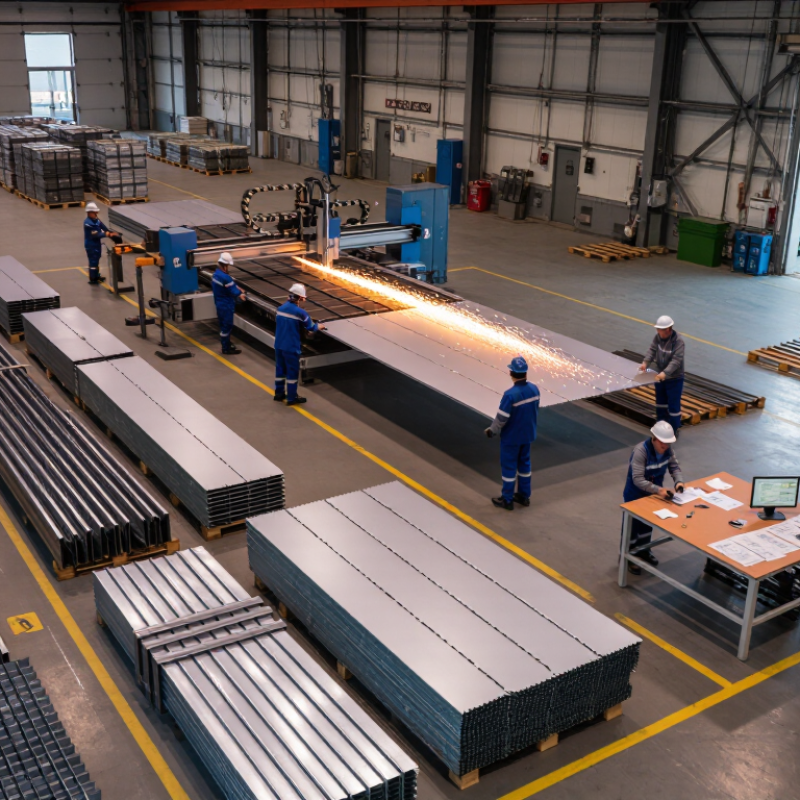
Flat bar grating is a modular walkway panel made from load-bearing flat bars and cross bars. The bearing bars carry the main load. Cross bars keep the panel rigid and evenly spaced. Unlike solid flooring, its open surface allows water, mud, heat, and light to pass through. This makes it practical for platforms, stairs, drainage covers, machine rooms, and offshore access routes.
Material choice matters. Carbon steel suits many industrial platforms, while galvanized or stainless steel performs better in wet, corrosive environments. The World Steel Association reported approximately 1.89 billion tonnes of crude steel production in 2023. That scale supports broad material availability, but it does not guarantee suitable grating quality. Buyers still need to check bar thickness, span, weld quality, surface treatment, and documented load ratings.
A useful detail is the panel’s visual texture. A worker can see a pipe leak below without lifting the floor. The open grid also reduces standing water after heavy rain. Yet small openings may be unsafe for narrow wheels or dropped tools. Design should follow project requirements and applicable standards, including EN ISO 14122-2 for industrial access platforms. A frequent mistake is choosing by weight alone. Span, support spacing, concentrated loads, corrosion allowance, and deflection can change the result. In practice, a lighter panel may work well over short supports, while a heavier panel may still fail when its span is underestimated.
A dependable manufacturer begins with verified engineering, not attractive product photographs. Request load tables showing span, bar size, bearing direction, and deflection limits. EN ISO 14122-2 provides guidance for industrial access platforms, while ASTM A123 supports evaluation of hot-dip galvanized coatings.
Material traceability matters. Each production batch should link to mill certificates, steel grade, welding records, and inspection results. The World Steel Association reported global crude steel production above 1.8 billion tonnes in 2023, yet volume alone cannot prove consistency. Ask whether the supplier controls incoming steel, weld penetration, panel dimensions, and surface treatment.
Quality systems deserve practical testing. The ISO Survey 2023 recorded more than 1.2 million ISO 9001 certificates worldwide. Certification is useful, but it does not replace factory audits or sample verification. Inspect a panel physically. Check twisted bars, sharp edges, uneven welds, and warped frames. Small defects become dangerous under repeated forklift traffic.
Tips: Compare two identical samples under the same span and load conditions. Confirm coating thickness at several points, not only one convenient area. Request recent inspection reports and independent test evidence. Also examine packaging: timber supports, moisture protection, labels, and corner guards should survive ocean transport.
A cheaper quote may hide thinner bearing bars, weaker welds, or unclear tolerances. That is easy to miss. Buyers should also review production capacity, corrective-action records, realistic lead times, and after-sales communication. No supplier is perfect; transparent answers often reveal more than polished brochures.
2026 List of Leading Flat Bar Grating Manufacturers Worldwide
The leading flat bar grating manufacturers in 2026 serve construction, water treatment, energy, and industrial access projects. Their strongest advantage is consistent production, not attractive catalog language. Experienced buyers usually compare welded steel grating, press-locked grating, aluminum options, and stainless steel grades. Each choice affects load capacity, corrosion resistance, weight, and installation time.
Reliable manufacturers provide clear drawings, material certificates, load tables, and dimensional inspection records. They should explain bearing bar depth, cross-bar spacing, surface treatment, and panel tolerances. Hot-dip galvanized grating remains practical for outdoor platforms, while stainless steel suits hygienic or corrosive environments. Some factories also produce serrated surfaces for wet walkways and custom cut panels for irregular structures.
Regional leaders often include large-volume producers in East Asia, established fabricators in Europe, and responsive manufacturers in North America and the Middle East. Buyers should assess welding quality, traceability, packaging, and export experience before selecting a supplier. A strong factory can support samples, shop drawings, and replacement panels after delivery. That matters.
However, supplier rankings are never completely fixed. Capacity, lead times, and raw material prices can change during the year. A manufacturer with excellent engineering may offer slower communication. Another may deliver quickly but provide weaker documentation. This is where careful comparison becomes necessary. No supplier is perfect.
For global buyers, comparing flat bar grating starts with load performance, not price alone. Review bearing bar depth, thickness, spacing, span, and surface finish. A walkway near saltwater needs corrosion resistance and reliable slip control. A warehouse platform may require greater load capacity and tighter deflection limits. Ask suppliers for tested load tables and material certificates. Do not rely on polished product photos. They prove very little.
Certifications should match the installation country and project risk. Check material test reports, welding records, dimensional inspection data, and traceability documents. Confirm that certificates cover the actual production batch. Independent inspection can reveal coating thickness, weld penetration, and warped panels. This step costs time. It can prevent expensive replacement. Buyers should also review export packing, labeling, and moisture protection. Documentation is part of product quality.
Customization may include panel length, cutouts, nosing, serrated surfaces, galvanizing, and special alloys. Share drawings with tolerances, support details, and accurate site measurements. A capable manufacturer should explain which changes could weaken the panel. Request a sample when the geometry is unusual. Field experience shows that small errors around drains and handrails can delay installation. Measure twice. Details matter. Compare technical response, revision control, lead time, and after-sales handling. The lowest quotation may hide fitting work, unclear certificates, or inconsistent finishing. Even careful buyers can miss those risks.
| Comparison Dimension | Welded Carbon-Steel Grating | Press-Locked Steel Grating | Aluminum Grating | Stainless-Steel Grating | What Global Buyers Should Verify |
|---|---|---|---|---|---|
| Typical manufacturing method | Cross bars are welded to load bars, commonly by resistance welding. | Cross bars are mechanically pressed into pre-punched load bars. | Load bars and cross bars are generally assembled by welding or pressure joining. | Load bars and cross bars are welded or press-locked, depending on the specified design. | Request process details, production drawings, and inspection records for the ordered batch. |
| Common load-bar material | Low-carbon structural steel, often specified to ASTM A36, ASTM A1011, EN 10025, or an equivalent grade. | Carbon steel or structural steel selected according to the project specification. | Aluminum alloys such as 6061 or 6063 are commonly specified for lightweight applications. | Stainless grades such as 304 or 316/316L are commonly selected for corrosion-sensitive environments. | Confirm the exact material grade, mill certificate, chemical composition, and mechanical properties. |
| Typical load-bar sizes | Approximately 25 × 3 mm to 100 × 10 mm; larger sizes may be available for heavy-duty designs. | Approximately 25 × 3 mm to 75 × 6 mm, subject to span and load requirements. | Approximately 25 × 3 mm to 75 × 6 mm, with lower self-weight than steel at comparable geometry. | Approximately 25 × 3 mm to 75 × 6 mm for many architectural and industrial applications. | Treat these as common market ranges, not a design approval; require calculations for each span and load case. |
| Common bearing-bar spacing | Typically 30, я40, or 60 mm center-to-center; other spacing can be produced. | Typically 30 or 40 mm center-to-center for industrial flooring and platforms. | Typically 25, 30, or 40 mm center-to-center, depending on opening and load requirements. | Typically 30 or 40 mm center-to-center for industrial, marine, and hygienic areas. | Check clear opening, ball-proof requirements, drainage needs, and local safety rules. |
| Common cross-bar spacing | Approximately 50, 76, or 100 mm center-to-center. | Approximately 50 or 100 mm center-to-center. | Approximately 50 or 100 mm center-to-center. | Approximately 50 or 100 mm center-to-center. | Confirm whether the quoted spacing is measured center-to-center or as clear opening. |
| Standard surface options | Plain, serrated, painted, or hot-dip galvanized. | Plain, serrated, painted, or hot-dip galvanized, subject to compatibility with the locking process. | Mill finish, anodized, powder-coated, or serrated surface. | Mill finish, pickled/passivated, electropolished, or serrated surface. | Specify slip resistance, coating thickness, color standard, and surface preparation requirements. |
| Primary corrosion-protection route | Hot-dip galvanizing, paint system, or duplex coating. | Hot-dip galvanizing or a project-specified paint system. | Natural oxide layer, anodizing, or powder coating. | Material selection, passivation, electropolishing, or a compatible surface treatment. | For galvanizing, request compliance with ASTM A123/A123M or ISO 1461 where applicable; verify coating inspection results. |
| Typical application fit | Industrial platforms, walkways, stairs, drainage covers, plant floors, and equipment access areas. | Architectural floors, removable panels, ventilation areas, platforms, and applications requiring a clean appearance. | Offshore structures, rooftops, access platforms, pedestrian walkways, and weight-sensitive installations. | Food-processing areas, chemical facilities, marine environments, wastewater plants, and hygienic installations. | Match the material to humidity, chemicals, temperature, traffic, hygiene, and maintenance conditions. |
| Load and span design | Capacity depends on load-bar size, spacing, span, support condition, and steel grade. | Capacity depends on the same structural variables; locking strength must also be considered. | Lower density reduces dead load, but the design must account for aluminum’s lower elastic modulus. | Capacity depends on grade, geometry, span, support, and the effect of the operating environment. | Require signed load tables or calculations based on the actual uniformly distributed and concentrated loads. |
| Safety and surface options | Serrated load bars, nosing, kick plates, handrail panels, and toe-board accessories. | Serrated or smooth load bars, removable panels, and architectural edge details. | Serrated load bars, stair treads, nosing, and lightweight removable panels. | Serrated surfaces, hygienic edge details, stair treads, and anti-slip treatments. | Ask for slip-resistance test data when required; do not rely on a generic “anti-slip” description. |
| Customization options | Panel dimensions, cut-outs, notches, banding, stair treads, clips, supports, and coating color. | Custom panel size, locking pattern, cut-outs, banding, removable-frame details, and accessory clips. | Custom alloy, finish, panel size, cut-outs, nosing, support frames, and fastening systems. | Custom grade, finish, panel size, cut-outs, hygienic details, edge protection, and fastening hardware. | Submit a dimensioned drawing showing tolerances, orientation, support points, holes, cut-outs, and accessory locations. |
| Common quality-management evidence | ISO 9001 certificate, material certificates, welding inspection records, dimensional reports, and coating records. | ISO 9001 certificate, material certificates, locking-process inspection, dimensional reports, and coating records. | ISO 9001 certificate, alloy certificates, dimensional inspection, finish records, and load documentation. | ISO 9001 certificate, stainless material certificates, passivation records, dimensional reports, and surface inspection. | Verify certificate scope, issuing body, validity dates, manufacturing address, and whether the certificate covers the supplied product. |
| Relevant standards to discuss | ASTM A36, ASTM A123/A123M, ISO 1461, EN 10025, EN ISO 14122, or project-specific standards. | Project-specific grating and structural-access standards, plus applicable material and coating standards. | Applicable aluminum material standards, EN ISO 14122, project structural requirements, and finish specifications. | Applicable stainless material standards, EN ISO 14122, hygienic requirements, and chemical-resistance specifications. | Select standards according to destination country, use case, structural design, fire requirements, and contract documents. |
| Export and packaging checks | Confirm pallet design, lifting points, corrosion protection during transit, labels, and packing list accuracy. | Protect interlocking edges and removable panels from deformation during loading and transport. | Use separators and moisture control to reduce scratching, staining, and galvanic-contact risk. | Prevent contamination from carbon steel, chloride exposure, and abrasive packaging materials. | Request pre-shipment photos, package dimensions, gross weight, HS-code support, and export documentation. |
| Best selection priority | High strength, broad availability, and economical galvanized construction. | Clean appearance, modularity, and suitability for removable or architectural panels. | Low weight, corrosion resistance, and easier manual handling. | High corrosion resistance, durability, and hygiene-related performance. | Compare total installed cost, service life, maintenance, freight weight, and replacement requirements—not only unit price. |
Global purchasing starts with measurable requirements, not attractive catalog photos. The World Steel Association reported approximately 1.88 billion tonnes of crude steel production in 2024. This scale creates many sourcing options, but also uneven material control. Buyers should specify bearing-bar size, cross-bar spacing, panel dimensions, steel grade, surface treatment, and design load. A clear technical drawing prevents expensive misunderstandings.
Quality checks should combine documents with physical inspection. Request heat-number traceability, mill certificates, welding records, and coating reports. For galvanized grating, compare results with ISO 1461 requirements and verify coating thickness at several points. Check flatness on a level table. Inspect welds for incomplete fusion, sharp projections, and inconsistent spacing. A sample may pass while bulk production fails. That risk is real. Independent pre-shipment inspection is often worthwhile, especially for unfamiliar factories.
Supplier selection also requires logistics discipline. UNCTAD’s Review of Maritime Transport notes that over 80% of global merchandise trade moves by sea. Confirm packing strength, container loading plans, moisture protection, and export documentation before ordering. Evaluate production capacity through recent project evidence, not promises. Ask how nonconforming panels are isolated and replaced. A low quote can hide weak traceability or costly port delays. I would also compare at least three suppliers using the same checklist; personal impressions are useful, but they are not proof.
Flat bar grating is a modular panel made from load-bearing bars and cross bars. The bearing bars carry the main load. The cross bars keep spacing stable. Its open surface lets water, heat, mud, and light pass through.
It suits walkways, stairs, platforms, drainage covers, machine rooms, and offshore access routes. Workers can sometimes see a leaking pipe below without removing the panel. That visibility can save inspection time.
Carbon steel often suits ordinary industrial areas. Galvanized or stainless steel performs better around moisture and corrosion. Saltwater needs stronger corrosion resistance. Material choice should follow the actual environment, not only the purchase price.
Compare bearing-bar depth, thickness, spacing, span, finish, and design load. Check tested load tables and material certificates. Do not trust polished photos alone. They prove very little.
Span and support spacing strongly affect performance. A lighter panel may work over short supports. A heavier panel may still fail across an underestimated span. Weight alone is a weak selection method.
Request material certificates, heat-number traceability, welding records, dimensional reports, and coating data. Confirm that documents match the actual production batch. For galvanized panels, check coating thickness at several points. Paperwork matters.
Inspect welds for incomplete fusion, sharp projections, and uneven spacing. Check panel flatness on a level table. Review coating consistency and visible damage. A sample may pass while bulk production fails. That risk deserves attention.
Provide panel lengths, cutouts, nosing, surface type, material grade, and finish requirements. Include support details, tolerances, and accurate site measurements. Small errors around drains or handrails can delay installation. Measure twice.
Compare at least three suppliers using the same technical checklist. Review recent project evidence, production capacity, lead time, packing, and replacement procedures. Check moisture protection and container loading plans. A low quotation may hide fitting work or port delays. Personal impressions help, but they are not proof.
This guide presents Flat Bar Grating as a practical structural solution for walkways, platforms, stairs, drainage covers, and industrial access areas. It explains how flat load-bearing bars and cross members create an open, durable surface that supports safe movement, efficient drainage, ventilation, and easy maintenance. Readers will also learn how to evaluate manufacturers by reviewing material quality, dimensional accuracy, load performance, surface treatment, production capacity, delivery reliability, and customer support.
The 2026 overview highlights leading manufacturers worldwide without focusing on brand names, helping global buyers compare product ranges, certifications, fabrication methods, and customization capabilities. It also outlines a clear purchasing process, including confirming drawings and specifications, checking samples, verifying inspection documents, assessing corrosion protection, and reviewing packaging and shipping arrangements. By combining technical evaluation with supplier due diligence, buyers can select Flat Bar Grating that meets project requirements, budget expectations, safety standards, and long-term operating conditions.

Jiulong