In 2026, global buyers are examining Stainless Wire Grates more carefully than ever. These components support filtration, drying, cooking, screening, shelving, and industrial processing. Their performance depends on wire grade, opening size, surface finish, load capacity, and manufacturing accuracy. A polished appearance alone proves little.
This guide introduces the main grate types available to international purchasers. It covers woven wire grates, welded wire grates, expanded metal grates, perforated sheet grates, and custom designs. Each option behaves differently under heat, pressure, vibration, moisture, and repeated cleaning. Some suit food-processing lines, while others perform better in chemical, architectural, or heavy-duty settings.
Material selection deserves attention. Stainless steel 304 often fits general environments, while 316 can offer stronger resistance in chloride-rich or coastal conditions. Higher-temperature applications may require specialized stainless alloys. Still, product labels can be misleading. Buyers should request mill certificates, dimensional reports, welding details, and sample testing before approving a large order.
Small differences matter. A 2-millimeter wire can change airflow, weight, and cleaning effort. Poorly aligned welds may create weak points or sharp edges. That risk is easy to underestimate. Supplier experience, traceability, packaging quality, and export documentation also influence the final result. This overview does not promise one universal answer. Instead, it helps buyers compare practical options, question optimistic specifications, and choose Stainless Wire Grates based on verified operating conditions. Performance should be measured in service, not only in a catalog.
Stainless wire grates often use 304 or 316 stainless steel. Grade 304 contains about 18–20% chromium. This chromium forms a protective oxide layer against everyday moisture, heat, and light chemical exposure. It suits kitchens, warehouses, food-processing areas, and general industrial platforms. Its balanced cost makes it a practical choice for many global buyers. Still, 304 can stain in salty air or near coastal washdown zones.
Grade 316 includes about 2–3% molybdenum. This addition improves resistance to chlorides, saltwater mist, and aggressive cleaning chemicals. It is often preferred for marine facilities, pharmaceutical rooms, chemical handling areas, and outdoor installations. However, 316 is not damage-proof. Poor welding, trapped debris, or rough surface finishing can still cause corrosion. That detail is sometimes overlooked. The better grade can fail when fabrication quality is weak.
Tips: Match the grade to exposure, not appearance. Ask for material certificates, wire diameter, welding details, and surface treatment records. Check chloride levels and cleaning agents before ordering. If conditions are uncertain, test a small grate section first. It costs time, but replacement costs more. Also review load ratings, openings, and local compliance requirements. A lower-cost 304 grate may perform well indoors, while 316 may offer safer service in wet, salty environments.
2026 Top Types of Stainless Wire Grates for Global Buyers
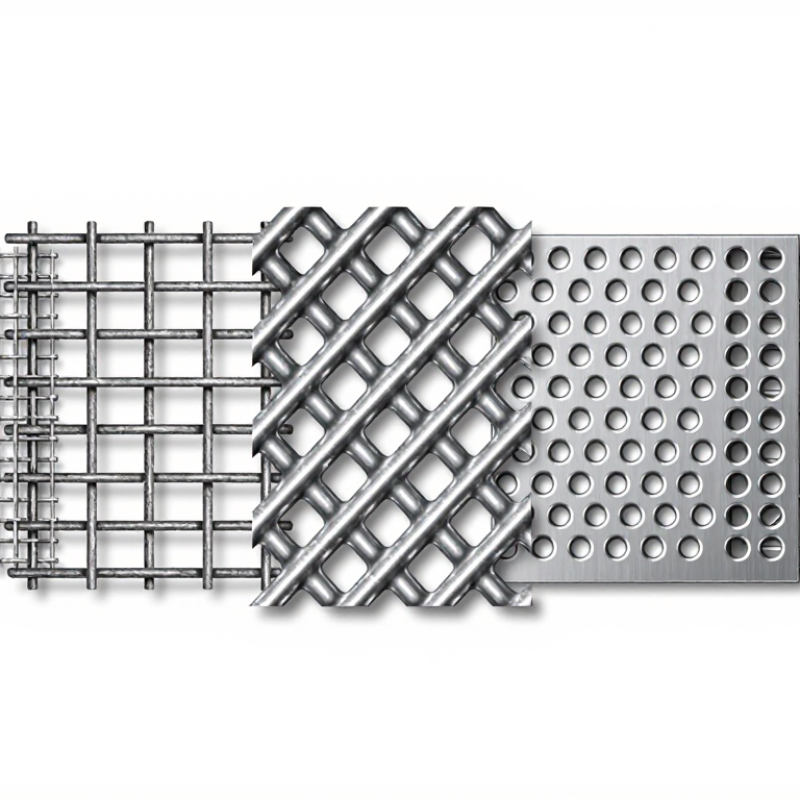
Stainless wire grates differ mainly by structure, not appearance. Each design changes strength, drainage, airflow, cleanability, and production cost. In factory inspections, welded grates often feel the most rigid under repeated foot traffic. Their intersecting wires create stable panels for platforms, shelving, machine guards, and drainage covers. However, poor weld penetration may cause early cracking near heavy-load points.
Woven grates use interlaced wires, creating a flexible and adjustable surface. They suit filtration, ventilation, food-processing screens, and applications requiring smaller openings. Their flexibility can become a weakness under concentrated loads. Check wire diameter, mesh count, edge reinforcement, and opening tolerance carefully. Small variations can affect installation.
Expanded grates are cut and stretched from stainless sheet, forming diamond-shaped openings without separate welds. They provide useful grip and moderate airflow, especially on walkways and protective panels. Perforated grates use punched holes, which offer controlled drainage and predictable open area. Hole shape, pitch, sheet thickness, and burr control matter greatly. No structure wins every application.
For coastal or high-humidity environments, stainless grade selection deserves practical attention. A corrosion-resistant grade may perform better near salt exposure, but surface contamination still causes staining. Ask for material certificates, dimensional reports, load data, and finish details. I have seen buyers focus on unit price and overlook edge treatment. That mistake can create installation delays. Test a sample under realistic conditions before approving large quantities.
| Grate Type | Structural Principle | Typical Material Grades | Common Opening Range | Typical Thickness or Wire Diameter | Load and Rigidity Characteristics | Drainage, Airflow, and Visibility | Main Advantages | Typical Limitations | Common Applications | Best Choice When |
|---|---|---|---|---|---|---|---|---|---|---|
| Welded Wire Grates | Longitudinal and transverse wires are resistance-welded at each intersection to create a rigid grid. | Stainless steel 304 or 304L for general indoor and outdoor service; 316 or 316L for chloride, coastal, and chemical environments. | Approximately 6–100 mm square or rectangular openings, depending on the panel design. | Common wire diameters are approximately 2–8 mm; heavier designs can use larger wire. | High rigidity and good dimensional stability. Load capacity depends on wire diameter, span, support spacing, opening size, and panel frame. | High drainage and airflow with a clear, open visual field. Openings can be selected to balance access control and flow. | Strong, uniform, easy to fabricate, and suitable for framed panels or removable access covers. | Welds may be vulnerable to poor fabrication or unsuitable cleaning. Small openings can increase weight and cost. | Machine guards, ventilation covers, walkways, drainage covers, shelving, safety barriers, and equipment enclosures. | High stiffness, repeated loading, and a precise custom grid are required. |
| Woven Wire Grates | Metal wires are interlaced in plain, twill, or other woven patterns without welding at every crossing. | Stainless steel 304 and 316 are widely used; 316L is preferred for more demanding corrosion conditions. | Fine mesh can range from below 1 mm to several millimetres; coarse woven grating may use larger openings. | Typical wire diameters range from approximately 0.10–3.00 mm, with heavier configurations available. | Flexible compared with welded grates. Rigidity improves with thicker wire, smaller openings, heavier weave, and proper frame support. | Excellent filtration and controlled airflow. Fine mesh provides high particle retention but lower open area and higher pressure drop. | Accurate openings, large selection of mesh counts, good filtration performance, and clean appearance. | Can deform under concentrated loads or impact if unsupported. Edges generally require a frame or folded border. | Filters, screens, guards, sieves, ventilation panels, food-processing equipment, and laboratory enclosures. | Particle control, filtration accuracy, or a fine opening pattern is more important than heavy load capacity. |
| Expanded Metal Grates | Solid stainless sheet is slit and simultaneously stretched to form a diamond-shaped mesh without welded joints. | Stainless steel 304 or 304L for general use; 316 or 316L for marine and chemical exposure. | Common long-way openings are approximately 10–75 mm; short-way openings are selected according to the pattern. | Typical sheet thickness is approximately 0.8–3.0 mm for light and medium-duty panels; heavier sheet is also available. | Good strength-to-weight ratio and continuous strands. Directional load behavior depends on strand width, thickness, and mesh orientation. | Good ventilation and drainage with a directional diamond pattern. Open area commonly ranges from about 30% to 80%, depending on the mesh. | Low material waste during production, high structural efficiency, slip-resistant surface options, and easy cutting. | Edges can be sharp unless finished. Diamond orientation and strand geometry must be considered during installation. | Platforms, steps, walkways, machine guards, equipment screens, partitions, and protective panels. | A lightweight, rigid sheet-like panel with useful open area and a textured surface is needed. |
| Perforated Metal Grates | Round, square, slotted, or custom holes are punched or formed in stainless steel sheet. | Stainless steel 304 or 304L for general applications; 316 or 316L for saltwater, processing, and aggressive environments. | Hole diameters or slot widths commonly range from approximately 1–20 mm, with larger patterns available. | Typical sheet thickness is approximately 0.5–3.0 mm; thicker plates can be specified for structural use. | Good panel flatness and predictable geometry. Strength depends on sheet thickness, hole size, pitch, pattern, and remaining ligament. | Open area commonly ranges from approximately 20% to 60%, although special patterns can fall outside this range. | Precise hole arrangement, smooth cleanable surface, controlled open area, and good acoustic or airflow design flexibility. | Lower open area than many wire grates at comparable strength. Excessive perforation can reduce stiffness around the holes. | Ventilation covers, acoustic panels, equipment guards, screens, sunshades, drainage panels, and architectural façades. | Controlled hole size, flatness, cleanability, or a finished architectural appearance is required. |
Global buyers often compare stainless wire grates by mesh count, wire diameter, and opening size. These values affect airflow, drainage, filtration, and handling strength. ISO 9044 defines key requirements for industrial woven wire cloth, while ASTM E11 provides standard sieve-cloth measurements. A higher mesh count usually creates smaller openings, but it can also reduce flow and increase cleaning difficulty.
Open area should be calculated, not guessed. For square openings, use:
open area (%) = opening ÷ (opening + wire diameter)² × 100
A 10 mm opening with 2 mm wire provides about 69.4% open area. Small changes matter. Wire diameter also influences stiffness and local wear. Welded grates generally resist movement better, while woven grates can offer more flexible sizing. ASTM A580/A580M supports stainless wire material verification, but it does not establish a universal grate load rating.
Tips: Request mesh count, clear opening, wire diameter, alloy, support span, and tested load rating in one datasheet. Load ratings should state units, deflection limits, loading direction, and safety factor. ASTM A370 can support mechanical testing, yet a tensile result is not a direct floor-grate capacity. A catalogue value may mislead when the span changes. Ask for a documented test method. Also check corrosion exposure, weld quality, and edge reinforcement. One detail is often missed: a grate may meet its load rating but still feel unsafe under repeated foot traffic.
Stainless wire grates serve in walkways, platforms, drains, shelves, and equipment guards. For global buyers, alloy selection often matters more than appearance. 304 stainless steel is the practical choice for general indoor and outdoor use. It handles moisture, food areas, light chemicals, and routine washing. Welded grates provide rigid support, while woven grates suit finer screening and lighter loads.
316L stainless steel deserves attention where chloride exposure is expected. Coastal air, saltwater splash, pool chemicals, and deicing salts can attack 304 over time. Its molybdenum content improves resistance to pitting and crevice corrosion. The low-carbon grade also supports cleaner welding performance. Choose 316L for marine platforms, coastal drainage covers, and processing areas with chloride-bearing cleaners. Small crevices still need careful drainage.
I have seen buyers select 304 because it looks adequate during installation. Months later, brown staining appeared near welds and trapped water. That experience changed my inspection checklist. I now review chloride levels, cleaning chemicals, temperature, load direction, and drainage before approving a grate. Finish quality matters too. Rough welds can retain salts. A smoother surface cleans more easily, but it may cost more. No alloy solves poor design. Even 316L can corrode in stagnant, contaminated gaps. Check certificates, dimensions, weld quality, and test requirements before shipment.
Global buyers should evaluate stainless wire grates through documented compliance, not appearance alone. Welded, woven, and perforated designs may suit platforms, guards, filtration areas, or equipment enclosures. ASTM A580 helps define stainless steel wire requirements, including material grades, dimensions, and testing expectations. Ask for the heat number, wire diameter, grade, and applicable test report.
ISO 9001 quality systems support controlled purchasing, welding, inspection, and corrective actions. They do not automatically prove that every grate meets the required specification. Reliable suppliers should provide lot traceability, dimensional records, weld checks, and inspection results.
RoHS screening is important when grates enter electrical or electronic equipment. XRF testing can identify several restricted substances quickly, but it may not detect every compound or coating issue. Independent laboratory confirmation is sometimes necessary.
Tips: Match the grate type to the load, opening size, corrosion exposure, and cleaning method. Check whether the report covers the exact production lot. A polished surface can still hide poor weld penetration. Paperwork can look complete, yet one missing heat number creates doubt. Review the compliance file before shipment, not after installation. Mistakes happen, especially when buyers accept generic certificates without checking dates, grades, or test scope.
The main types are welded, woven, expanded, and perforated. Each changes strength, drainage, airflow, cleaning, and cost.
Choose welded grates for platforms, shelving, machine guards, and drainage covers. Their intersecting wires create rigid panels for repeated foot traffic.
Poor weld penetration may cause cracks near heavy-load points. Inspect welds closely, especially around corners and support areas.
Woven grates suit filtration, ventilation, food-processing screens, and smaller openings. They flex under pressure, so concentrated loads require careful review.
Check wire diameter, mesh count, edge reinforcement, and opening tolerance. Small measurement differences can affect installation.
Expanded grates are cut and stretched from sheet, creating diamond openings and useful grip. Perforated grates use punched holes for controlled drainage and predictable open area.
Review hole shape, pitch, sheet thickness, and burr control. Sharp burrs can complicate handling, cleaning, and installation.
Select a corrosion-resistant grade suitable for salt and moisture exposure. Surface contamination can still cause staining, even with suitable material.
Request material certificates, heat numbers, dimensional reports, load data, finish details, and lot traceability. Check the exact production lot.
Match the grate to load, opening size, corrosion exposure, and cleaning method. Test a sample under realistic conditions before ordering large quantities.
No. A quality system supports controlled production, but it does not guarantee every panel is correct.
Screening matters when grates enter electrical or electronic equipment. One test may miss certain compounds or coating problems, so independent confirmation can help.
In 2026, Stainless Wire Grates will remain a practical solution for industrial, architectural, food-processing, and infrastructure applications. Buyers should begin by comparing stainless grades: 304, containing approximately 18–20% chromium, is suitable for general environments, while 316 or 316L, with about 2–3% molybdenum, offers improved resistance to chlorides, saltwater, and aggressive conditions. Structural options include welded grates for strength and stability, woven grates for flexible filtration, expanded grates for lightweight ventilation, and perforated grates for controlled openings and drainage.
A reliable selection should consider mesh count, wire diameter, open area, and load rating, since these factors directly influence strength, flow, visibility, and maintenance. For most standard uses, 304 is an economical choice; 316L is preferable where chloride exposure is expected. Global buyers should also verify ASTM A580 wire requirements, ISO 9001-based quality procedures, and RoHS screening to support consistent manufacturing, material traceability, and responsible international sourcing.

Jiulong