Top Structural Grating Suppliers for Global Buyers

Time:2026-10-13 Author:Liam
0%

Structural grating supports safe access across factories, platforms, walkways, stairs, and drainage areas. Global buyers need more than a low quoted price. They must verify load capacity, span requirements, surface finish, corrosion resistance, and delivery reliability. A grating panel may look simple on a warehouse floor. Its bearing bars, cross bars, welds, and support spacing determine long-term performance.

Industry data reinforces this purchasing context. The World Steel Association reported approximately 1.89 billion tonnes of crude steel production worldwide in 2023. That scale shows the depth of the steel supply chain, but it does not guarantee consistent grating quality. The UNCTAD Review of Maritime Transport 2024 also highlights continuing pressure on shipping routes, freight capacity, and delivery schedules. For international projects, supplier location matters. So does export experience.

This guide examines leading Structural grating suppliers serving global buyers. It considers manufacturing capability, material options, certifications, testing procedures, customization, packaging, and after-sales communication. Relevant benchmarks include ISO 14122 safety requirements, ASTM material practices, and project-specific engineering specifications. However, certificates alone are not enough. Buyers should request mill certificates, welding records, drawings, samples, and independent inspection when risk is high.

No supplier is perfect. That matters.

Some vendors offer strong prices but limited technical support. Others provide excellent engineering but longer production cycles. The most reliable choice depends on the application, environment, budget, and destination requirements. Our comparison aims to make those differences visible, practical, and easier to verify before a purchase order is signed.
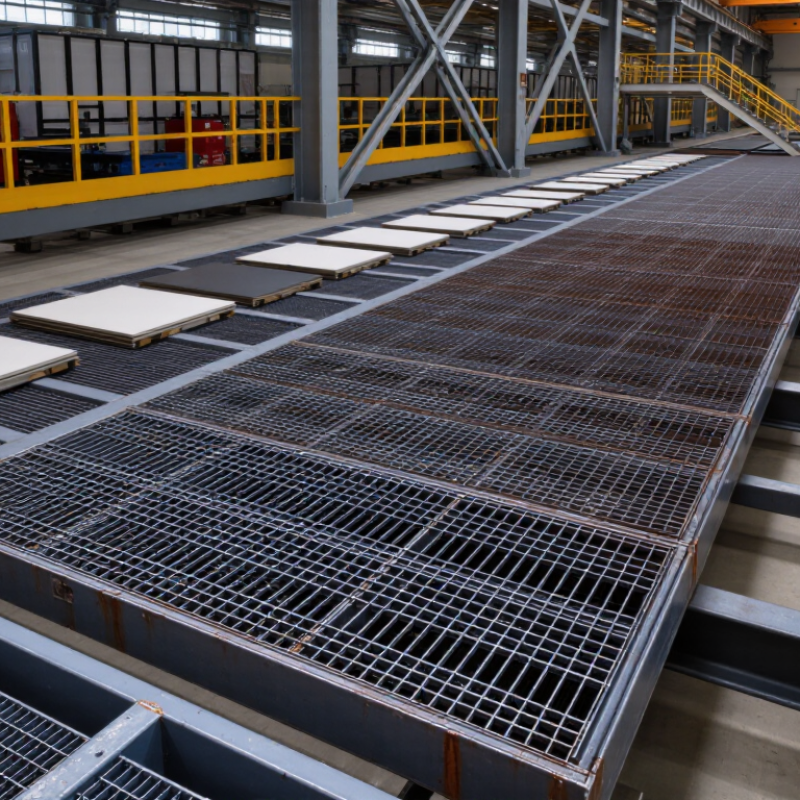
Top Structural Grating Suppliers for Global Buyers

What Structural Gratings Are and Why Global Buyers Need Them

What Structural Gratings Are and Why Global Buyers Need Them

Structural grating is a load-bearing panel made from parallel bars joined by cross members. It forms open platforms, walkways, stair treads, drainage covers, and service floors. The open design allows water, mud, light, and air to pass through. Workers gain better footing in wet industrial areas. A well-made panel also reduces unnecessary steel weight. That matters during transport and installation.

Global buyers need more than a low unit price. They need predictable dimensions, suitable surface protection, and documented load performance. Grating may be made from carbon steel, stainless steel, or aluminum, depending on corrosion exposure and project loads. Press-locked and welded constructions behave differently under traffic. Buyers should check span, bearing-bar depth, panel size, slip resistance, and testing records. In my experience, drawings often reveal problems earlier than samples. Still, one sample cannot represent every production batch. That assumption deserves review.

Tips: Ask suppliers for material certificates, tolerances, load tables, coating details, and traceable inspection reports. Confirm whether measurements use metric or imperial units. Request packaging photos, because bent edges can delay installation. Clarify shipping documents and replacement procedures before payment. A reliable supplier answers specific questions without hiding behind generic claims. If the walkway serves heavy vehicles, involve a qualified engineer. Safety should not depend on guesswork.

Top Structural Grating Suppliers for Global Buyers - What Structural Gratings Are and Why Global Buyers Need Them

Product-selection reference for international buyers. Final specifications should be confirmed against project drawings, applicable codes, and calculated loads.
Grating Type Typical Material Manufacturing Method Common Surface Finish Typical Applications Main Purchasing Advantage Key Buyer Checks
Press-Locked Grating Carbon steel, stainless steel, or aluminum Cross bars are mechanically pressed into pre-punched bearing bars Mill finish, painted, powder coated, or galvanized, depending on material Architectural walkways, platforms, ventilation screens, mezzanines, and light industrial floors Clean appearance and flexible bar patterns for projects requiring visual consistency Confirm cross-bar retention, panel dimensions, load span, and corrosion environment
Welded Steel Grating Low-carbon or structural carbon steel Cross bars are resistance-welded to bearing bars at each intersection Hot-dip galvanized, painted, or untreated for protected indoor use Industrial platforms, stairs, plant floors, maintenance areas, and access walkways Strong, durable, and widely used for heavy-duty industrial access surfaces Check bearing-bar depth, thickness, span, load rating, weld quality, and galvanizing specification
Swage-Locked Aluminum Grating Aluminum alloy Cross bars are mechanically locked into pre-formed grooves in bearing bars Mill finish or anodized finish Marine facilities, rooftops, water-treatment plants, food-processing areas, and lightweight platforms Lower weight and good resistance to many atmospheric corrosion conditions Verify alloy, temper, electrical conductivity requirements, deflection limits, and galvanic compatibility
Stainless Steel Grating Stainless steel grades such as 304 or 316 Welded or press-locked construction Mill finish, pickled, passivated, or electropolished Food and beverage plants, chemical facilities, pharmaceutical areas, kitchens, and coastal installations High hygiene potential and strong corrosion resistance when the correct grade is selected Match the grade to chlorides, chemicals, temperature, cleaning agents, and surface-finish requirements
Serrated-Surface Grating Carbon steel, stainless steel, or aluminum Bearing bars have notched or serrated top surfaces to increase slip resistance Usually galvanized, painted, or mill finished according to base metal Wet floors, ramps, outdoor platforms, drainage zones, and areas exposed to oil or ice Improved underfoot traction compared with smooth-top grating Assess pedestrian safety, cleaning requirements, footwear compatibility, and local slip-resistance rules
Heavy-Duty Grating Structural carbon steel or stainless steel Welded construction with deeper and thicker bearing bars Hot-dip galvanized, painted, or specified protective coating Vehicle crossings, loading areas, heavy equipment platforms, industrial floors, and trench covers Designed for higher concentrated or rolling loads than standard walkway panels Provide wheel loads, axle spacing, impact conditions, clear span, support details, and deflection criteria
Drainage Grating Galvanized steel, stainless steel, ductile iron, or aluminum Bar, trench, or slot-grating construction selected for drainage openings Galvanized, coated, stainless, or corrosion-resistant natural finish Drain channels, trench drains, wastewater facilities, roadsides, and industrial washdown areas Combines surface access with controlled water drainage Check hydraulic opening, debris clearance, heel safety, vehicle loading, frame compatibility, and removable access
Stair Tread Grating Carbon steel, aluminum, or stainless steel Grating panel with formed nosing and end plates or support brackets Galvanized, painted, mill finish, or stainless finish Industrial stairs, fire escapes, maintenance ladders, and access towers Provides a ventilated, open stair surface with defined tread edges Confirm tread width, nosing profile, fixing holes, stair angle, handrail interface, and concentrated-load requirements
Micro-Mesh or Close-Mesh Grating Steel, stainless steel, or aluminum Small-aperture welded or press-locked panel construction Galvanized, painted, powder coated, or mill finish Walkways above sensitive equipment, platforms requiring small openings, and areas where tools or objects may fall Reduces the passage of small objects while retaining ventilation and drainage Balance aperture size, self-weight, cleaning access, drainage, and required load capacity
Fiberglass-Reinforced Plastic Grating Fiberglass reinforcement with a resin matrix, commonly polyester or vinyl ester Molded or pultruded composite construction Resin-rich grit or smooth molded surface Chemical plants, wastewater treatment, offshore areas, and electrically sensitive locations Non-metallic construction with corrosion resistance and low electrical conductivity Check resin type, UV exposure, fire performance, chemical compatibility, span, and deflection

Key Materials, Designs, and Performance Standards

Top Structural Grating Suppliers for Global Buyers

Key Materials, Designs, and Performance Standards

Material selection determines whether structural grating survives salt, chemicals, heat, or repeated loading. Carbon steel offers high strength and cost efficiency. Stainless steel suits wet, hygienic, and corrosive areas. Aluminum reduces dead load, while fiberglass-reinforced plastic resists many aggressive chemicals.

The World Steel Association reported 1,888.2 million tonnes of global crude steel production in 2023, showing steel’s continuing industrial importance. Still, production volume does not prove product quality.

Design details matter on the walkway.

Welded grating handles heavy industrial loads. Press-locked panels create a clean appearance but need careful assessment under impact. Serrated surfaces improve traction around oil or rain. Close-mesh patterns help prevent small tools from falling through. Suppliers should provide bearing-bar dimensions, span tables, open-area percentages, and deflection calculations.

A useful warning: nominal load capacity can look impressive without showing support spacing.

Performance standards provide a common technical language.

Hot-dip galvanized steel should be specified against ISO 1461 or ASTM A123/A123M, depending on the project region. ANSI/NAAMM MBG 531 supports consistent grating terminology and fabrication guidance. Buyers should also confirm slip resistance, weld quality, dimensional tolerances, and fire behavior for each application.

The Global Infrastructure Hub continues to identify infrastructure investment as a major worldwide need, yet procurement documents often overlook maintenance access. That omission deserves more attention.

A reliable supplier explains assumptions, not just numbers.

How to Evaluate Structural Grating Suppliers Worldwide

Evaluating structural grating suppliers worldwide requires more than comparing prices. Start with documented experience in industrial platforms, walkways, drainage covers, and maintenance areas. Ask for project references with similar spans, loads, climates, and installation conditions. A supplier should provide load tables, bar dimensions, tolerances, welding procedures, and traceable material certificates. These details reveal engineering discipline.

Quality systems matter, but certificates are not enough. The ISO Survey 2022 reported about 1.26 million ISO 9001 certificates worldwide, showing its broad adoption. It does not prove every batch is reliable. Request independent test records for load capacity, slip resistance, weld strength, and coating thickness. For galvanized products, verify alignment with ISO 1461 or the project’s specified standard. The World Steel Association reported global crude steel production of roughly 1.89 billion tonnes in 2023. Large output supports supply continuity, yet it cannot replace batch-level inspection.

Compare lead times, packaging, corrosion protection, and response speed before signing a contract. Ask how the supplier handles warped panels, missing clips, or damaged coatings. A clear corrective-action process is valuable. Country-of-origin documents, inspection reports, and customs data should match the shipment. I would also inspect a production sample, not only review photographs. That step can expose small weld irregularities or sharp edges. It takes time. It may prevent a costly site correction. Supplier evaluation is never perfectly objective; local communication, changing steel prices, and incomplete project records can distort the decision.

Leading Supplier Regions and Their Manufacturing Strengths

Top Structural Grating Suppliers for Global Buyers

Leading Supplier Regions and Their Manufacturing Strengths

Supplier geography often reveals a factory’s strongest production capabilities. East Asian manufacturers commonly offer high-volume steel grating, automated welding, and flexible export packaging. Their plants may produce serrated, plain, and pressure-locked panels in multiple sizes. Many facilities also support custom spacing, surface treatments, and private inspection requests. Price remains attractive, but buyers should verify steel grades, welding consistency, and load-test records.

Northern and Central European suppliers often emphasize engineering control and documented compliance. Their workshops typically use precise cutting lines, robotic welding cells, and traceable material batches. This approach suits walkways, platforms, drainage covers, and industrial access systems. Lead times may be longer. Documentation is usually stronger. That trade-off matters for regulated construction projects.

South Asian producers have developed strong capacity in galvanized grating and heavy-duty steel fabrication. Their advantages include skilled manual finishing, adaptable order quantities, and competitive labor costs. Some suppliers combine traditional fabrication with modern CNC equipment. Results can vary between factories. A sample may look excellent, while a large shipment needs closer monitoring. Buyers should request dimensional reports, coating-thickness readings, and independent pre-shipment inspections.

Regional strengths are useful, but they never replace factory-level evaluation. Compare production photos with audit findings. Check whether testing occurs on the actual order. Packaging also deserves attention; bent bearing bars can create installation delays. A supplier’s location provides clues, not proof. That distinction is easy to overlook.

International Purchasing, Compliance, and Delivery Considerations

Top Structural Grating Suppliers for Global Buyers
International Purchasing, Compliance, and Delivery Considerations

Choosing a structural grating supplier requires more than comparing prices. Experienced buyers review load tables, bar dimensions, surface treatment, and manufacturing tolerances. Request material certificates, welding records, and inspection reports before approving production. These documents should identify the steel grade, batch number, and testing method clearly. A vague certificate creates problems later.

Compliance requirements differ across markets and project types. Confirm local standards, customs classifications, labeling rules, and required conformity documents with qualified specialists. Galvanized grating may need coating-thickness evidence, while stainless products may require corrosion-related documentation. Ask whether the supplier can provide drawings in your required format. Small details matter.

Delivery planning should include realistic production time, port schedules, and protective packing. Bundles need secure lifting points and moisture-resistant wrapping, especially during long sea transport. Clarify Incoterms, insurance responsibility, container limits, and procedures for damaged cargo. A pre-shipment inspection can verify dimensions before goods leave the factory. It is not perfect, though. Measurements may vary slightly between inspection tools, and rushed approvals can hide costly errors. Keep signed drawings, photographs, and communication records for traceability. Also, allow time for customs questions. Late paperwork can delay an otherwise ready shipment.

FAQS

What is structural grating used for?

It forms walkways, stair treads, drainage covers, platforms, and service floors. Water and air pass through the open design.

Which materials are commonly used for structural grating?

Common options include carbon steel, stainless steel, and aluminum. Select the material according to loads and corrosion exposure.

What details should buyers check before ordering?

Confirm span, bearing-bar depth, panel size, surface protection, slip resistance, and load performance. Check the measurement system too.

Is a low purchase price enough?

No. Packaging, coating quality, delivery time, inspection records, and replacement procedures also affect the final cost.

What documents should a supplier provide?

Request material certificates, load tables, dimensional tolerances, coating details, and traceable inspection reports. The documents should match the shipment.

Can one sample represent an entire production batch?

Not always. A single sample can mislead. Review batch records and inspect production pieces when possible.

How can buyers evaluate supplier experience?

Ask for references involving similar spans, loads, climates, and installation conditions. Project photos help, but they are not enough.

What should buyers inspect when receiving the panels?

Look for bent edges, sharp welds, warped panels, missing clips, and damaged coatings. Small defects can delay installation.

When is engineering support necessary?

Involve a qualified engineer when heavy vehicles or unusual spans use the walkway. Safety should not depend on guesswork.

What weaknesses should buyers recognize during evaluation?

Price comparisons may ignore changing steel costs and local communication problems. My judgment may still be incomplete without site information.

Conclusion

Structural Grating is an essential industrial and architectural product used for platforms, walkways, stair treads, drainage covers, service areas, and other load-bearing applications. Global buyers should understand how grating design, bar spacing, surface treatment, load capacity, corrosion resistance, and material selection affect safety and long-term performance. Common options include steel, stainless steel, and aluminum, each offering different benefits for strength, weight, durability, and environmental resistance. Performance standards, dimensional accuracy, welding quality, and inspection procedures are also important when comparing products.

Choosing reliable Structural Grating suppliers worldwide requires evaluating manufacturing capabilities, quality control systems, technical support, production capacity, and experience with international orders. Buyers should also review documentation, packaging methods, delivery schedules, customs requirements, and applicable compliance certifications. Supplier regions may differ in material expertise, fabrication technology, cost efficiency, and export experience, so a balanced assessment of quality, total cost, communication, and logistics can help ensure a secure and efficient purchasing decision.


Liam

Liam

Liam is a dedicated marketing professional with a profound expertise in the industry, where he excels at highlighting the unique advantages of our core products. With a keen understanding of market trends and consumer needs, Liam frequently updates our company’s professional blog, providing......