Carbon Steel Treads do more than connect one level to another. They carry daily foot traffic, meet wet boots, grit, dropped tools, and changing loads. Choosing the right tread means looking beyond the steel grade or purchase price. Dimensions, surface pattern, support spacing, finish, drainage, and maintenance all shape performance. A tread that looks sturdy on a sample may feel slippery or flex underfoot once installed. Details matter.
A useful shop-floor rule is: “Choose for load, grip, and exposure—not price alone.” This is an editorial principle, not a verified quotation from a named expert; no sourced expert statement was provided. A publishable expert quote should be confirmed with its speaker and source. That small caveat matters. Trust is built on evidence, not impressive-sounding names.
This guide’s seven tips examine practical choices, from measuring the opening to matching tread construction with the environment. Picture a damp service stair with muddy soles and a hand truck passing over each landing. Its needs differ from those of a dry indoor access platform. Compare specifications carefully, and ask suppliers for documented load data and finish details. No option is perfect. A coating can wear, and an aggressive surface can complicate cleaning. The best choice balances safety, durability, upkeep, and budget—and leaves room to inspect the installation after real use.
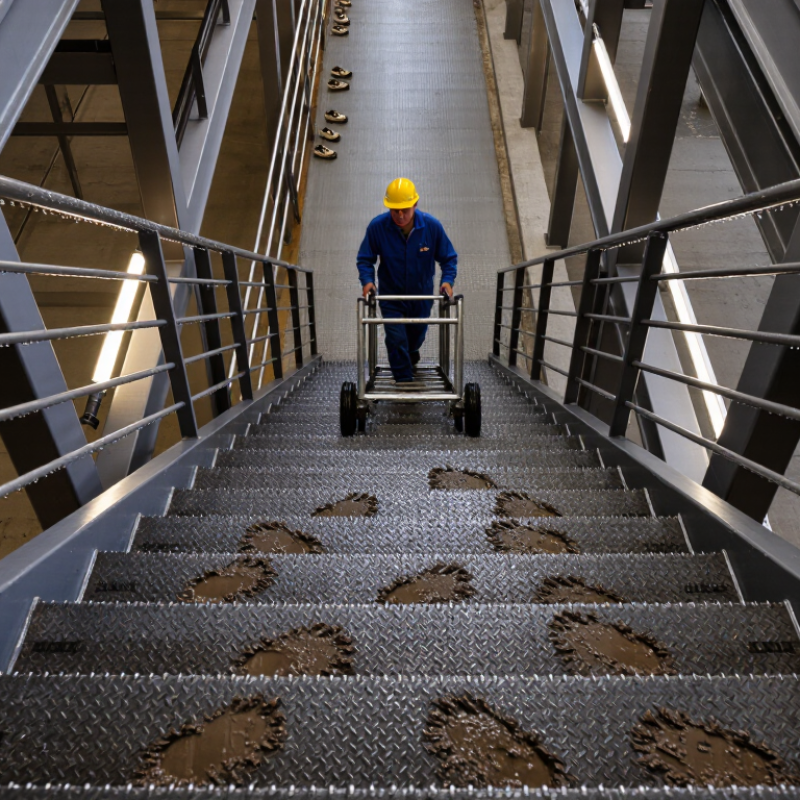
Start with the actual duty, not the catalog label. A factory walkway, loading bay, and outdoor stair face different wheel loads, foot traffic, and exposure. Note whether carts turn, grit or oil reaches the surface, and how often it gets washed. These details affect tread pattern, thickness, and support spacing. Verify the design load and applicable requirements with a qualified engineer.
This is not a tread-specific estimate, but it highlights why exposure planning matters. Standing water, salts, and damaged coatings can speed up rust on carbon steel. Specify a suitable protective finish, protect cut edges, and provide drainage where water may collect. Check that fasteners and supporting steel suit the same environment. Coatings are not magic. Inspect after installation.
7 Tips for Choosing Carbon Steel Treads
Load capacity starts with the full assembly, not the tread alone. Check steel thickness, support spacing, connection details, and the expected load, including concentrated loads from carts or equipment. For bar-grating treads, the NAAMM Metal Bar Grating Manual provides load tables based on bar size and span. Confirm that the selected table matches the actual support arrangement. A tidy specification can still miss a real-world load.
Pattern affects drainage, traction, and cleaning. Serrated surfaces can help where water or oily residue is expected, while raised patterns may suit cleaner, drier areas. Neither pattern guarantees safe footing. ASTM E303 describes a pendulum method for measuring surface friction; testing should reflect the tread’s expected wet or dry conditions. Not just texture. Check the nosing too: a clear edge can help users see where each step begins.
The stakes are measurable. The U.S. Bureau of Labor Statistics reported 885 fatal work injuries involving falls, slips, and trips in 2023. That figure does not isolate stair-tread failures, but it underlines why load and slip checks belong together. Ask for documented load ratings and test details, rather than relying on appearance or a generic friction claim. I would revisit the choice once site conditions are clear.
Measure the clear walking width and tread depth before ordering carbon steel treads. A narrow tread can feel awkward, even when the stair fits the drawing. Check the available space, foot traffic, and how users carry tools or materials. Then confirm the support spacing and expected load with the project’s design professional. Thickness should match those conditions, not simply look sturdy. More steel adds weight and may complicate installation. Too little can allow noticeable flex. Small differences matter.
Edge design affects grip, comfort, and maintenance. A projecting nosing can make each step easier to see, while a serrated or raised surface may help where water or dirt is common. For plate treads, inspect the front edge closely; sharp corners can catch footwear and feel unpleasant underfoot. For open treads, consider how debris and drainage will behave. I would recheck the edge detail against the actual site conditions, not just the plan. It is easy to overlook that part. Also confirm that the chosen finish and edge treatment will not obstruct fit or create hard-to-clean corners.
Choosing a carbon steel tread starts with the service conditions, not the grade name alone. Compare the material specification, thickness, and required load capacity against the project drawings. Higher strength does not automatically mean better corrosion resistance. It may also affect forming or welding, so confirm fabrication requirements with the supplier or a qualified engineer. Small detail. The raised pattern can trap water and grit.
Coatings need to suit both the environment and the way the tread will be installed. Hot-dip galvanizing can protect exposed surfaces, but cut edges, drilled holes, and welds deserve attention. Paint systems may work well in less demanding settings when surface preparation and coating thickness are controlled. Powder coating can provide an even finish, though damaged areas may expose the steel beneath. No coating is maintenance-free.
Look closely at drainage, contact points, and areas beneath the tread. Salt, standing water, and trapped debris can accelerate rust, even when the visible surface looks sound. Specify how edges and field modifications will be protected, then inspect them after installation. A practical maintenance plan should note coating damage, loose fasteners, and early rust staining. One thing is easy to miss: a coating selected for the top surface may not protect hidden joints equally well.
Steel grade affects strength, while coatings and site conditions affect corrosion protection. Compare the specified minimum yield strength of these common structural grades as one factor when selecting tread material.
Values shown are specified minimum yield strengths for common plate thickness ranges; confirm the applicable ASTM specification and thickness for your order. Yield strength does not measure corrosion resistance. For exposed or corrosive environments, evaluate suitable paint systems or hot-dip galvanizing, along with drainage, maintenance, and the project’s coating requirements.
Reference basis: ASTM A36/A36M, ASTM A572/A572M Grade 50, and ASTM A588/A588M Grade A.
Choosing carbon steel treads starts with safety documents, not a glossy finish. Ask for the applicable load rating and test information, and check that the stated standard fits your project and location. Requirements can vary. Confirm tread width, support spacing, and expected foot traffic against the design. If wet conditions are likely, ask how slip resistance was measured; a raised pattern alone does not prove performance. Keep the records with the project drawings.
Fabrication quality shows up in small details. Inspect sample edges for burrs, check that punched openings are consistent, and look for welds with even profiles and no obvious gaps. Compare actual dimensions with the approved drawing before installation. Protective coatings also matter: ask how surface preparation is handled and how damaged areas should be repaired. A neat-looking tread can still have a weak weld, so appearance is only one check.
Supplier support is part of the specification. Request clear drawings, material details, inspection records, and realistic lead times before ordering. Ask who will answer technical questions if a site measurement changes. Good support means useful answers, not just quick replies. If a response feels vague, pause and clarify it in writing. This can feel fussy, but missed details are harder to fix after the treads arrive.
| Tip | What to verify | Practical check | Why it matters |
|---|---|---|---|
| 1. Confirm applicable safety requirements | Identify the governing building, workplace-safety, and project requirements for the stairway. For U.S. workplaces, review applicable provisions of OSHA 29 CFR 1910.25; use the current adopted code and project specifications for design criteria. | Ask for the design basis, including the specified loads, support conditions, and any required documentation. Confirm that the requirements apply to the intended installation. | Requirements depend on the installation and jurisdiction. A product description alone does not establish that a stair system meets applicable requirements. |
| 2. Match the tread to the design loads and span | Check tread width, unsupported span, bearing-bar direction, support details, and the specified uniform and concentrated loads against the supplier’s engineering data. | Provide the supplier with the clear span and design loads, then request load and deflection information for the exact tread configuration. | Capacity depends on the complete configuration, not just the steel grade or tread thickness. Incorrect span or loading assumptions can lead to excessive deflection or inadequate capacity. |
| 3. Inspect fabrication and fit-up details | Review dimensions, squareness, cut edges, attachment details, weld quality, and consistency with approved drawings. Where relevant, ask whether fabrication guidance such as the current ANSI/NAAMM MBG 531 manual is used. | Request fabrication drawings and inspection records. Check that tread length, width, nosing, and connection locations match the site measurements and support layout. | Accurate fabrication helps the tread seat properly and reduces installation issues. Referenced guidance does not replace project-specific design or inspection. |
| 4. Choose a surface suited to the environment | Compare plain, serrated, or other specified walking surfaces based on expected moisture, debris, footwear, and cleaning conditions. | Describe the operating environment and ask for the surface option and any limitations to be stated in the quotation and drawings. | Surface choice affects traction, cleanability, and maintenance. No surface pattern should be treated as a substitute for a site-specific slip-risk assessment. |
| 5. Specify corrosion protection | Determine whether the tread will be painted, coated, or hot-dip galvanized, and confirm compatibility with the exposure and maintenance plan. For hot-dip galvanizing, ask whether the specified coating standard, such as ASTM A123/A123M where applicable, is included. | State the required finish, preparation, coating standard, and any touch-up requirements on the purchase documents. Confirm that the finish is suitable for the service environment. | Carbon steel can corrode when exposed to moisture and aggressive conditions. A clearly specified finish supports more consistent procurement and maintenance planning. |
| 6. Check nosing and attachment requirements | Verify the required nosing profile, visibility or contrast provisions where applicable, and the specified bolted or welded attachment details. | Compare the tread drawings with the stair stringers and installation details. Confirm hole locations, fastener requirements, and whether field welding or coating repair is expected. | Properly coordinated nosing and connections help achieve a secure installation and consistent stair geometry. |
| 7. Evaluate supplier documentation and support | Check whether the supplier can provide material and finish records, drawings, load data, lead-time information, installation guidance, and a clear process for handling discrepancies. | Request a complete submittal package before approval and confirm who will respond to technical questions during fabrication and delivery. | Responsive technical support and traceable documentation make it easier to review the product, coordinate installation, and resolve issues. |
Note the location, wheel loads, foot traffic, cart turns, and cleaning frequency. Photograph the supports and mounting area. Small details matter.
Measure clear width, tread depth, and support spacing. Match thickness to the expected load; extra steel adds weight, while insufficient thickness may flex.
Check for sharp corners, projecting nosings, and edges that could catch footwear. I would recheck them on site; drawings can miss awkward corners.
Raised or serrated patterns may help, but they do not prove slip resistance. Ask how performance was measured. Water and grit change the picture.
Consider standing water, salts, and cleaning chemicals. Specify a suitable protective finish, protect cut edges, and provide drainage where water collects. Coatings still need inspection.
Compare dimensions with the approved drawing. Look for consistent openings, smooth edges without burrs, and welds without obvious gaps. A neat surface is not enough.
Request load ratings, test information, drawings, material details, and inspection records. Confirm that the stated requirements fit the project and location.
Ask about realistic lead times and who handles technical questions if measurements change. Clarify vague answers in writing. It can feel fussy, but late fixes are harder.
Choosing Carbon Steel Treads begins with understanding where and how they will be used, including the environment, installation method, and expected foot traffic. These conditions help determine the required load capacity, tread pattern, and level of slip resistance. Select dimensions, thickness, and edge details that fit the structure and provide stable, comfortable access.
Compare steel grades and protective finishes according to exposure to moisture, chemicals, and wear. Corrosion protection can help extend service life, while suitable fabrication quality supports a consistent fit and dependable performance. Before making a selection, verify that the treads meet relevant safety requirements and that the supplier can provide clear product information, accurate specifications, and practical support. Considering these factors together can help you choose treads that balance safety, durability, and installation needs.

Jiulong