Choosing the right Welded Grating is more than comparing prices or counting steel bars. The wrong panel can flex under a loaded trolley, collect water, or create a dangerous slipping point near an entrance. A stronger decision begins with the actual site.
Dr. Michael J. Fitzpatrick, a respected welding engineering author and educator, offers a useful principle: “Good welds begin with good preparation.” That idea applies directly to Welded Grating selection. Before ordering, inspect the platform’s span, load pattern, walking direction, drainage needs, and surrounding equipment. A panel beside a chemical tank may require a different material than one inside a dry warehouse.
These seven tips examine practical choices, including bearing-bar size, cross-bar spacing, surface finish, steel grade, corrosion protection, load capacity, and installation details. Small differences matter. A narrow opening may prevent a dropped tool from passing through. Serrated bars may improve traction, but they can also catch thin shoe soles or complicate cleaning.
Experience teaches another lesson. Product labels do not always explain the full risk. A galvanized panel can still perform poorly when its supports are misaligned. I have seen specifications focus heavily on strength while overlooking maintenance access. That is an imperfect habit, but it deserves reflection.
The best Welded Grating is not automatically the heaviest option. It is the one that matches real conditions, verified calculations, and responsible installation. These guidelines will help buyers ask sharper questions before the purchase becomes permanent.
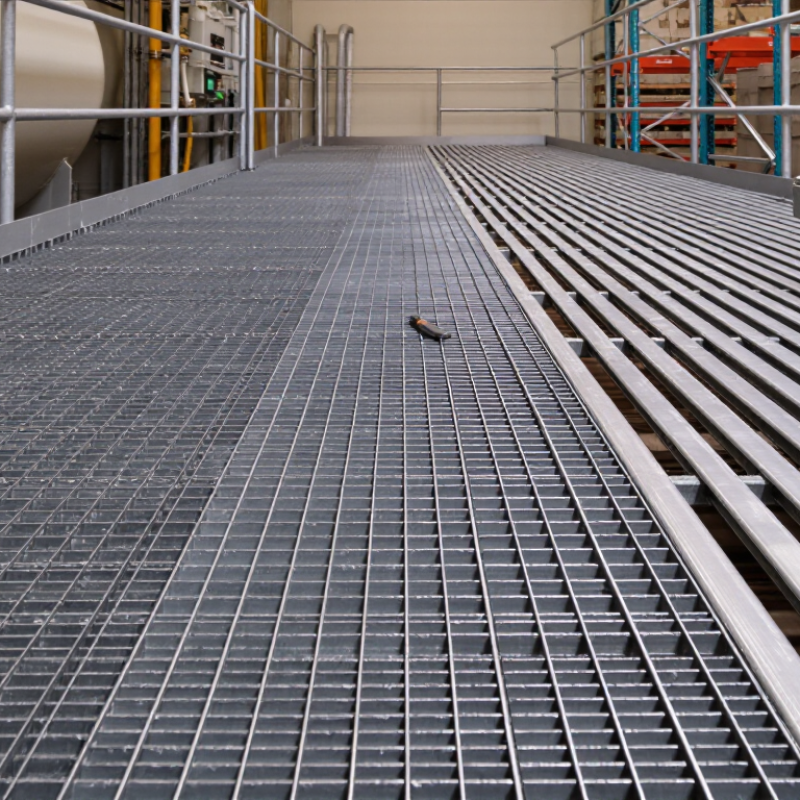
Choosing the right welded grating starts with identifying its type and working environment. Smooth bars suit dry walkways and maintenance platforms. Serrated bars provide better traction where oil, rain, or mud may collect. Heavy-duty grating supports forklifts, storage areas, and wide equipment spans. Light-duty panels work well for pedestrian routes and ventilation screens.
Material selection matters just as much. Galvanized carbon steel offers practical strength and corrosion resistance for outdoor platforms, stair treads, and drainage covers. Stainless steel performs better near chemicals, food-processing areas, and coastal moisture. Aluminum is lighter and useful where handling weight matters. However, it may need closer spacing or deeper bars under heavy loads. Do not guess.
Before ordering, check load capacity, span length, bearing-bar size, panel opening, and surface finish. Small openings help prevent tools and shoes from passing through. Serrated surfaces can improve safety, but they may be uncomfortable for frequent kneeling work. In site inspections, loose supports and poor fit cause more trouble than the grating itself. Confirm frame dimensions and fixing methods against current engineering requirements.
A common mistake is choosing by price alone. The cheapest panel can become expensive after bending, rusting, or repeated replacement. I still recheck drainage, access, and cleaning needs, because drawings rarely show every practical detail. Ask for verified load data and installation guidance before approving the final specification.
Define Welded Grating Types and Their Common Applications
| No. | Selection Tip | Relevant Grating Type | Key Specification or Consideration | Common Applications | Recommended Choice |
|---|---|---|---|---|---|
| 1 | Match the load requirement | Heavy-duty welded steel grating | Select the bearing-bar depth, thickness, and span according to static or rolling loads. Common bearing-bar sizes include 25 × 3 mm, 30 × 5 mm, and 40 × 5 mm. | Truck-access platforms, industrial floors, loading areas, equipment supports, and drainage covers. | Use deeper or thicker bearing bars and reduce the unsupported span when heavy vehicles, machinery, or concentrated loads are present. |
| 2 | Choose the correct surface for slip resistance | Serrated welded grating | Serrations are formed on the top of the bearing bars to improve traction. They are especially useful where water, oil, mud, or ice may accumulate. | Wet walkways, wastewater plants, chemical processing areas, ramps, stair treads, and outdoor platforms. | Select serrated bearing bars for wet or contaminated environments. Use plain surfaces where easy cleaning and smooth trolley movement are more important. |
| 3 | Specify the bearing-bar spacing | Standard or close-mesh welded grating | Typical bearing-bar centers are approximately 30, 40, or คน? 60 mm, while cross-bar centers are commonly about 50, 76, or 100 mm. Final spacing should suit the required load and opening size. | Pedestrian platforms, factory floors, trench covers, maintenance walkways, and areas requiring small-object containment. | Choose closer spacing where small tools, heels, or debris must not pass through the openings. |
| 4 | Consider corrosion exposure | Hot-dip galvanized welded grating | A zinc coating protects carbon steel from atmospheric moisture. Coating performance depends on exposure, surface preparation, coating thickness, and maintenance. | Outdoor platforms, roofs, bridges, utility areas, construction sites, and general industrial facilities. | Use galvanized steel for most outdoor applications. Consider stainless steel or another corrosion-resistant material for severe chemical or marine exposure. |
| 5 | Select a material that fits the environment | Carbon steel, stainless steel, or aluminum welded grating | Carbon steel provides high strength and economy; stainless steel offers improved corrosion resistance; aluminum provides low weight but generally lower structural strength than steel. | Factories, food-processing areas, coastal facilities, cleanrooms, marine platforms, and lightweight access systems. | Base the material decision on corrosion, hygiene, weight, strength, temperature, and lifecycle maintenance requirements. |
| 6 | Plan for access and safety | Welded stair treads and panel grating | Stair treads may include nosing, end plates, bolt holes, and serrated surfaces. Panels should be sized for safe handling, installation, and removal. | Industrial stairs, emergency exits, mezzanines, inspection routes, machine platforms, and service walkways. | Use serrated stair treads with visible nosing for frequent foot traffic, and confirm dimensions against applicable building and workplace-safety requirements. |
| 7 | Verify standards, finish, and installation details | Welded grating with specified banding and fasteners | Confirm panel tolerances, weld quality, bearing direction, edge banding, surface finish, clips, saddle clamps, and the applicable project standard before fabrication. | Engineered platforms, plant renovations, public infrastructure, industrial maintenance areas, and modular access systems. | Provide drawings showing span, support locations, panel dimensions, load criteria, opening limits, finish, and fastening method. |
Match the material to exposure, not only price. Carbon steel suits dry indoor areas. Stainless steel handles salt spray, chemicals, and frequent washing better. Aluminum reduces weight but may need extra support under heavy loads.
It provides a zinc barrier for outdoor steel and helps protect minor surface damage. However, strong acids, high temperatures, and some chemical processes can shorten its life. Check chemical concentration and operating temperature first.
Inspect cut edges, welds, and places where water becomes trapped. These areas often show early rust. Small details matter.
Clean and prepare the damaged area before repair. Use a compatible zinc-rich system according to the coating instructions. Do not trap moisture beneath dirt or poorly prepared paint. Keep drainage paths clear.
Confirm bearing bar depth, thickness, span, and load class. Include forklift traffic, platforms, and heavy equipment. Ask for calculations when loads are significant. Appearance is not enough.
Measure support spacing, elevations, access routes, and fixing points. Confirm the need for clips, bolts, removable sections, or welded attachments. Measure twice. A small measurement error can cause costly rework.
Specify suitable surface treatment for outdoor, wet, or corrosive conditions. Include slip resistance where oil, rain, or dust may occur. Openings should remain safe for shoes and tools while allowing drainage.
Request material certificates, weld inspection records, dimensional checks, and traceable batch information. Inspect alignment, weld fusion, sharp projections, and damaged coating. Paperwork helps, but it cannot reveal every site problem.
A cheaper panel may require frequent cleaning, recoating, or replacement. Those costs can exceed the initial purchase price. A low price can mislead. Review uncertain assumptions with a qualified engineer when corrosion, heavy traffic, or chemicals are involved.
Choosing the right Welded Grating requires more than selecting a standard panel. Start by identifying the grating type and its intended application, such as walkways, platforms, stair treads, drainage covers, or industrial flooring. Evaluate expected loads, support spans, pedestrian or vehicle traffic, and safety requirements before deciding on bearing bar size and spacing. These factors help ensure the grating remains stable, durable, and suitable for everyday use.
Material selection is equally important. Consider steel, stainless steel, or aluminum according to strength, weight, environment, and corrosion exposure. Select an appropriate protective finish, such as galvanizing or coating, when moisture or chemicals may be present. Compare surface options, including smooth or serrated finishes, along with panel dimensions and installation requirements. Finally, verify applicable standards, fabrication accuracy, connection methods, and supplier quality controls. A reliable choice should balance performance, service life, maintenance needs, and total project cost while fitting the specific conditions of the installation.

 Jiulong