China’s steel industry gives buyers a deep manufacturing base for industrial access platforms. The World Steel Association reported that China produced about 1,005 million tonnes of crude steel in 2024. That scale matters. It supports broad capacity, material availability, and competitive fabrication options for Catwalk Steel Grating.
Yet production volume does not prove manufacturing quality. A reliable supplier must show more than attractive photographs or a large factory. Buyers should examine load calculations, bearing-bar dimensions, weld consistency, surface treatment, and inspection records. Practical details matter. Think of a grated walkway above a processing line, exposed to moisture, oil, vibration, and daily foot traffic.
Standards provide a useful reference point. GB/T 700 helps identify structural steel grades, while GB/T 13912 addresses hot-dip galvanized coatings. EN ISO 14122-2 is also relevant when grating forms part of permanent machinery access. These standards do not replace project-specific engineering. They create a clearer basis for comparison.
This guide evaluates leading Chinese manufacturers through production experience, technical capability, customization, quality control, and export reliability. Evidence may include test certificates, dimensional reports, coating measurements, and traceable project records. The strongest companies can explain their choices clearly. They should discuss span, load class, aperture size, fixing systems, and corrosion conditions.
No ranking is perfect. Supplier claims can change, and public information may remain incomplete. Buyers should verify current certifications and request samples before placing a significant order. That small step can reveal uneven galvanizing, poor flatness, or weak welds early. The goal is not to find the loudest manufacturer. It is to identify the most dependable fit for the intended catwalk, environment, and safety requirements.
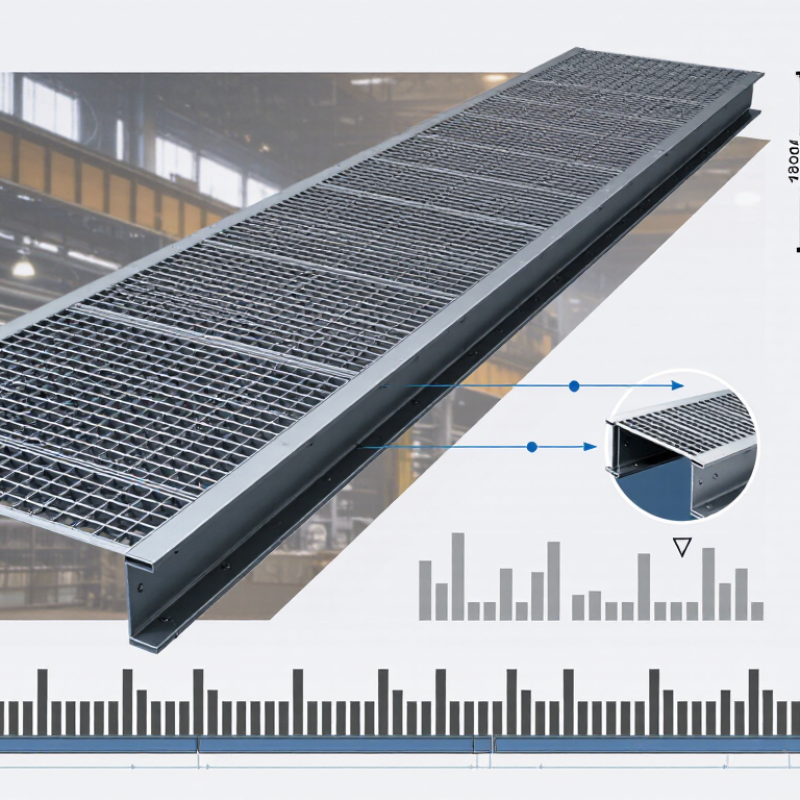
Catwalk steel grating is a load-bearing walkway made from parallel steel bearing bars and cross bars. Open spaces allow rain, dust, oil, and snow to pass through. This design improves drainage and reduces standing water around workers’ feet. Serrated surfaces can add traction in wet or oily areas. Plain surfaces remain practical for dry indoor platforms.
It is commonly installed around storage tanks, boilers, conveyors, bridges, rooftops, and factory maintenance lines. In China, experienced manufacturers usually produce panels from carbon steel, galvanized steel, or stainless steel. The correct choice depends on corrosion exposure, span, load, and cleaning requirements. ISO 14122-2 addresses permanent platforms and walkways for machinery access. OSHA’s walking-surface rules also require walking areas to remain clean, orderly, and sanitary. Small details matter.
The U.S. Bureau of Labor Statistics recorded 211,640 nonfatal workplace injuries involving falls, slips, and trips in 2020. That figure shows why walkway design deserves more than a visual inspection. Engineers should verify bearing-bar spacing, deflection, fixing clips, handrails, and local load requirements. A heavy panel is not automatically a safe panel. Poor drainage or loose fasteners can still create hazards. I would also request material certificates, dimensional checks, weld inspection records, and a documented galvanizing thickness. Some suppliers provide attractive samples, but samples cannot represent every production batch. That limitation deserves honest review.
Common nominal bearing-bar depths used in industrial catwalk grating configurations
Catwalk steel grating is a prefabricated, load-bearing walkway panel made from parallel bearing bars joined by cross bars. Common nominal bearing-bar depths range from approximately 25 mm to 50 mm. Shallower bars are often used for light-duty access walkways, while deeper bars are typically selected for longer spans, heavier loads, platforms, stairs, and industrial maintenance areas. The final specification must be verified against span, live load, deflection limits, corrosion conditions, and the applicable structural standard.
Evaluating Chinese catwalk steel grating manufacturers requires more than comparing prices. China produced about 1.005 billion metric tons of crude steel in 2024, according to World Steel Association data. This scale supports strong production capacity, but it does not guarantee consistent grating quality. Buyers should verify material certificates, heat numbers, welding records, and traceability from steel coil to finished panel.
Standards matter.
A capable manufacturer should explain compliance with relevant GB/T, YB/T, ASTM, or EN requirements. For galvanized grating, ask whether the process follows ISO 1461 or an equivalent specification. Check zinc coating thickness, weld strength, bearing-bar dimensions, surface flatness, and slip resistance.
Load calculations should identify span, walking load, deflection limits, and safety factors. Test reports should come from competent, independent laboratories, not only internal inspection sheets. ISO’s 2022 Survey recorded more than 1.4 million ISO 9001 certificates worldwide, yet certification alone cannot replace physical verification.
Practical experience often reveals weaknesses. Request a sample panel and measure its spacing, weld penetration, serrated edges, and cut accuracy. Inspect packaging too. Bent panels may indicate poor handling before delivery.
Ask for production photographs, inspection plans, and records from similar catwalk projects. A factory visit is useful, though it can create a staged impression. No checklist is perfect. I would still test a sample, review corrective-action records, and confirm whether the quoted load applies to the actual support spacing. A low bid may simply hide missing tests or thinner steel.
China’s Top Catwalk Steel Grating Manufacturers?
China’s leading catwalk steel grating manufacturers support industrial plants, walkways, stairs, platforms, and maintenance decks. Their capabilities usually cover design, cutting, welding, surface treatment, inspection, packaging, and export coordination. Many factories produce welded, press-locked, and serrated grating for different loads and drainage needs. Engineers choose bearing bar depth, spacing, and panel size from verified project data. A 30-millimeter bearing bar is not automatically suitable for every span. Hot-dip galvanizing improves outdoor durability, while painted finishes suit controlled environments. Some workshops also process stainless steel for corrosive areas.
In practical project reviews, reliable suppliers begin with drawings, load requirements, and installation conditions. They confirm dimensions before production, rather than relying on a standard catalog. Factory inspectors commonly review weld penetration, flatness, serration, coating thickness, and panel labeling. Load tests and material certificates add useful evidence, especially for elevated platforms. Documentation matters. Clear drawings help contractors avoid costly cutting errors on site. Yet not every quotation reveals steel grade or coating thickness. Buyers should ask directly.
Strong Chinese manufacturers also provide custom clips, saddle clamps, stair treads, and support frames. They can adjust panel widths for containers, machinery zones, or narrow service corridors. Export teams usually prepare protective packing, moisture control, and marked bundles. Site conditions still deserve attention. Salt air, chemical splash, and frequent trolley traffic can change the specification. Small details matter. A practical concern is often missed: a low price may hide thinner bars, weaker welds, or incomplete testing. Buyers should compare measurable capabilities, not polished promises.
When comparing China’s top catwalk steel grating manufacturers, inspect quality before accepting a low quotation. World Steel Association’s World Steel in Figures 2024 reports that China produced 1,019.1 million tonnes of crude steel in 2023. Large output does not guarantee reliable grating. Request mill certificates, steel grade records, weld inspection results, and zinc-coating measurements. Check bearing-bar spacing, cross-bar alignment, cut edges, and visible weld penetration. Numbers matter.
For galvanized products, compare the coating standard, not only the word “galvanized.” ISO 1461 specifies minimum coating requirements according to steel thickness, while ASTM A123 is widely used for hot-dip galvanized structural components. Ask for batch test reports and a sample panel. A practical inspection should include a 1-metre panel, caliper measurements, flatness checks, and loading evidence. I have seen attractive samples hide uneven welds and sharp burrs. That mistake is costly.
Customization should cover platform dimensions, bearing-bar depth, surface type, stair nosing, fixing clips, and drainage openings. Confirm whether drawings are reviewed by an engineer or copied from a sales template.
Pricing should separate steel weight, galvanizing, cutting, packing, freight, and tooling. The World Bank Commodity Markets Outlook has repeatedly shown that steel-related commodity prices can fluctuate significantly across quarters. Therefore, compare validity periods and adjustment clauses.
The cheapest offer may exclude essential accessories. Mine once did. Less impressive, but more honest.
Selecting a catwalk steel grating manufacturer requires more than comparing price lists. World Steel Association data recorded about 1.888 billion tonnes of crude steel production in 2023. That scale shows why material traceability matters. Ask for heat numbers, mill certificates, and coating records. A serious manufacturer should explain steel grade, bearing-bar size, spacing, and permitted span clearly.
Check the design against ISO 14122-2 for permanent access platforms and walkways. Confirm the project’s live load, maintenance loads, deflection limits, and drainage needs before production. For wet factories, serrated surfaces can improve grip around oil or rainwater. For dusty sites, open mesh may reduce accumulation. Small details matter.
Request drawings before signing.
Factory experience is visible in the details. Inspect weld consistency, panel squareness, cut edges, and galvanized coverage. The International Zinc Association notes that zinc coating life depends strongly on environment and coating thickness, so “galvanized” alone is not a sufficient specification. Ask how samples are tested and whether inspection reports are independently verified. A supplier may offer a lower quote by reducing bar thickness or omitting testing. That saving can become a weak, vibrating walkway. I have seen drawings that looked complete but lacked support spacing. Recheck every dimension. Delivery capacity, packaging quality, replacement-panel availability, and communication during revisions should also influence the decision. The best manufacturer is not always the cheapest; it is the one that can prove each claim.
| Selection Dimension | Common Project Requirement | Relevant Technical Data | What to Confirm with the Manufacturer | Recommended Evaluation Method |
|---|---|---|---|---|
| Steel Grade | General industrial walkways and platforms | Carbon steel is commonly selected for strength and cost efficiency; stainless steel is used where corrosion resistance and hygiene are important. | Material grade, chemical composition, mechanical properties, and mill test certificate availability | Check the material certificate against the approved design specification. |
| Surface Protection | Outdoor, humid, coastal, or chemically exposed environments | Hot-dip galvanizing is widely used for carbon-steel grating; coating requirements are commonly referenced to ISO 1461 or ASTM A123/A123M, depending on the project specification. | Applicable galvanizing standard, coating thickness or mass, surface preparation, and repair procedure for damaged areas | Request coating inspection records and verify the specified standard before production. |
| Bearing Bar Size | Pedestrian platforms, maintenance walkways, stairs, or equipment access areas | Load capacity depends on bearing-bar depth, thickness, span, spacing, support conditions, and applied load; it cannot be determined from panel size alone. | Bearing-bar dimensions, panel span, support width, design load, deflection limit, and load tables used | Require a signed load calculation or load table applicable to the exact configuration. |
| Cross-Bar Arrangement | Standard walkways or areas requiring smaller openings | Cross bars may be twisted, round, flat, or press-locked, depending on the grating construction and required appearance. | Cross-bar type, spacing, joining method, dimensional tolerances, and edge-bar configuration | Compare approved drawings with a first-article or pre-shipment inspection sample. |
| Opening Size | Sites with tools, small components, drainage requirements, or fall-through risks | The clear opening must be selected according to pedestrian safety, maintenance needs, drainage, and applicable building or workplace rules. | Nominal pitch, clear opening, opening tolerance, toe-board requirement, and project safety criteria | Verify clear openings on production drawings and inspect representative panels. |
| Slip Resistance | Wet, oily, inclined, or frequently accessed catwalks | Serrated bearing bars can improve traction compared with plain bars, but the final performance depends on contamination, footwear, slope, and maintenance. | Serration pattern, serration depth, slip-resistance test method, and suitability for the operating environment | Use project-specific slip-resistance requirements and request test evidence where required. |
| Panel Dimensions | Projects requiring efficient transportation, installation, and maintenance access | Panel length and width should match support locations, handling limits, access openings, and the manufacturer’s production capability. | Maximum practical panel size, dimensional tolerances, lifting points, and packing method | Review shop drawings, handling calculations, and a detailed packing list. |
| Stair Treads | Industrial stairs, access ladders, and emergency routes | Stair treads generally require a nosing, end plates, fixing holes, and dimensions coordinated with the stair stringers. | Tread width, nosing profile, end-plate thickness, hole pattern, fixing hardware, and applicable stair standard | Approve a dimensioned tread drawing before batch fabrication. |
| Fabrication Quality | Projects requiring consistent fit-up and rapid installation | Important controls include bar alignment, weld or lock integrity, panel squareness, cut-out accuracy, edge-bar attachment, and dimensional consistency. | Quality-control plan, welding procedure, inspection points, allowable tolerances, and nonconformance process | Use a pre-shipment inspection checklist with documented measurements and photographs. |
| Fasteners and Fixings | Removable flooring, vibrating equipment areas, or restricted maintenance zones | Common systems include saddle clips, M-clips, hold-down clips, and bolted connections; the fixing type must suit the support steel and service loads. | Fastener material, corrosion compatibility, quantity per panel, installation torque, and replacement availability | Confirm the fixing layout through installation drawings and a trial fit. |
| Standards and Compliance | International construction, energy, chemical, marine, or infrastructure projects | Common references may include ISO 1461 for hot-dip galvanized coatings, ASTM A123/A123M for structural steel galvanizing, and project-specific grating or structural design standards. | Exact edition of each required standard, inspection scope, certificates, and third-party testing requirements | Create a compliance matrix linking every purchase requirement to objective evidence. |
| Traceability and Documentation | Safety-critical or multi-batch procurement | A complete document package may include material certificates, galvanizing records, inspection reports, drawings, packing lists, and certificates of conformity. | Heat or batch identification, document language, retention period, and approval workflow | Make document submission and traceability contractual requirements. |
| Export and Delivery Capability | Overseas projects with strict delivery schedules | Delivery performance depends on drawing approval, raw-material availability, fabrication capacity, coating lead time, packaging, and customs documentation. | Production schedule, inspection date, packing dimensions, gross weight, shipping terms, and export documents | Request a milestone schedule and evaluate performance using agreed delivery dates. |
| Manufacturer Selection Score | Comparing qualified suppliers without relying only on quoted price | A balanced assessment should consider technical compliance, quality controls, documentation, delivery reliability, communication, warranty terms, and total installed cost. | Evidence for each scoring category, references for comparable work, inspection access, and corrective-action capability | Use a weighted bid-evaluation sheet rather than selecting solely by unit price. |
It is a load-bearing walkway made from parallel steel bars and cross bars. Open spaces allow rain, dust, oil, and snow to pass through. Drainage matters.
It is used around storage tanks, boilers, conveyors, bridges, rooftops, and factory maintenance lines. These areas often need durable access paths.
Serrated surfaces provide better traction in wet or oily areas. Plain surfaces work well on dry indoor platforms. Conditions decide.
Carbon steel suits many general applications. Galvanized steel offers better corrosion resistance. Stainless steel suits demanding environments and frequent cleaning.
Confirm span, bearing-bar spacing, walking loads, maintenance loads, deflection limits, and support locations. Drainage and cleaning needs also matter.
Request material certificates, heat numbers, welding records, coating records, and traceability documents. Inspect weld consistency, panel squareness, cut edges, and surface finish.
A sample may not represent every production batch. A factory visit can also create a staged impression. Samples can mislead.
Check for bent panels, loose fasteners, damaged coatings, inaccurate spacing, and poor packaging. Recheck dimensions against approved drawings. Small errors can matter.
Catwalk Steel Grating is a durable, open-grid flooring solution designed to provide safe access, drainage, ventilation, and visibility in industrial facilities, platforms, stairways, walkways, and maintenance areas. When evaluating Chinese manufacturers, buyers should consider material quality, welding or fastening strength, load capacity, dimensional accuracy, surface treatment, corrosion resistance, production consistency, and compliance with applicable project standards. Reliable suppliers should also demonstrate strong quality-control procedures, technical expertise, and the ability to provide clear testing and inspection documentation.
Leading manufacturers in China may offer various grating types, bearing-bar sizes, surface finishes, support systems, and customized dimensions for different environments. To compare options effectively, review product specifications, customization capabilities, production lead times, packaging, after-sales support, and total pricing rather than focusing only on the initial quotation. The right manufacturer should understand your required loads, layout, installation conditions, material preferences, and delivery schedule. A balanced assessment of quality, engineering support, communication, and long-term value will help ensure the selected Catwalk Steel Grating performs safely and reliably throughout the project.
Jiulong