Explore our range of heavy-duty gratings, stair treads, and industrial handrails engineered for the most demanding physical environments.
Whitepaper Analysis of Corrosion Resistance, Load Performance, and Structural Mechanics
In modern industrial design, structural flooring and access platforms must satisfy both high-strength load bearing capacities and long-term durability in highly corrosive settings. Stainless steel grating specifications have become the global benchmark for safety and resilience. Unlike carbon steel variants, stainless steel offers natural passive protective layers that survive extreme pH fluctuations, chemical exposures, and highly humid marine environments without degrading structurally.
Globally, the demand for high-end stainless steel industrial grating is driven by rapid industrialization, green building regulations, and a shift toward longer-lived, lower-maintenance infrastructure. For petrochemical plants, paper mills, wastewater processing facilities, and offshore oil rigs, choosing the correct material grade (such as 304, 316, or 316L stainless steel) and mechanical configuration is a critical engineering decision that affects plant lifespans and operator safety.
Understanding these specifications requires detailing the geometric and metallurgical factors that dictate load capacity under stress. By working closely with premier manufacturing facilities, engineers can specify precise load bar dimensions, cross bar spacing, and surface finishes to meet international standards like ASTM, DIN, and ISO. Choosing a qualified and accredited manufacturer ensures compliance with these critical safety guidelines, protecting investments and lives.
Comprehensive geometric limits, load properties, and metallurgical options
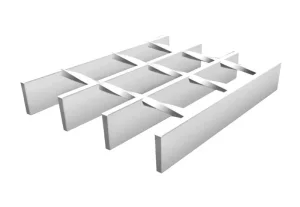
When reviewing product parameters, three key design choices directly influence physical strength and durability: the size of the bearing bar, the spacing between bars, and the chosen surface profile. Slabs subjected to heavy equipment or rolling vehicular loads require deeper and thicker bearing bars. Alternatively, platforms intended for pedestrian safety prioritizes anti-slip properties, requiring serrated profiles or specialized chemical etching. Below is a detailed view of standard parameters designed to satisfy global industrial codes:
| Spec Parameter | Common Range / Standard | Key Applications & Engineering Purpose |
|---|---|---|
| Material Grades | ASTM A240 / EN 10088 (SS304, SS316, SS316L, SS321) | SS304 for general atmosphere; SS316/316L for chemical exposure and marine air. |
| Bearing Bar Size | 20 x 3 mm to 100 x 10 mm | Determines the span capacity and ultimate load limit (uniform & concentrated load). |
| Bearing Bar Pitch | 30 mm, 40 mm, 60 mm (Standard) | Influences point load distribution and pedestrian safety. 30mm is standard for walkways. |
| Cross Bar Pitch | 50 mm, 100 mm (Standard) | Secures lateral stability and prevents twisting under high-temperature expansion. |
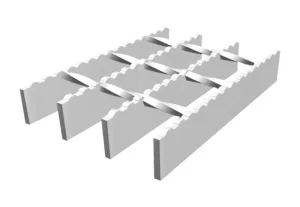
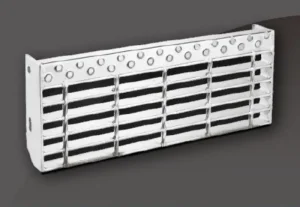
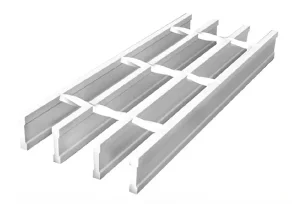
| Surface Options | Plain, Serrated, I-Bar | Serrated increases grip by 40% under wet or oily conditions; I-bar reduces raw steel weight. |
| Manufacturing Norms | YB/T 4001.1, ANSI/NAAMM MBG 531, BS 4592 | Ensures dimensional tolerance, welding strength, and certified performance benchmarks. |
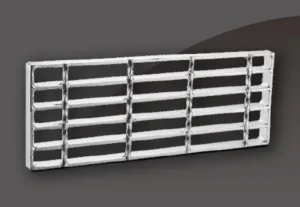
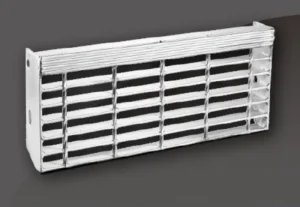
Our standard configurations, such as the JG255/30/100, JG325/30/100, and JG405/30/100 series, provide optimal performance for pedestrian paths. For heavy infrastructure requirements, models like the JG705/30/100 and JG1008/30/100 handle heavy vehicle wheel rolling loads and dynamic vibrational forces without bowing or structural compromise.
Proven utility in highly demanding chemical, civil, and marine installations
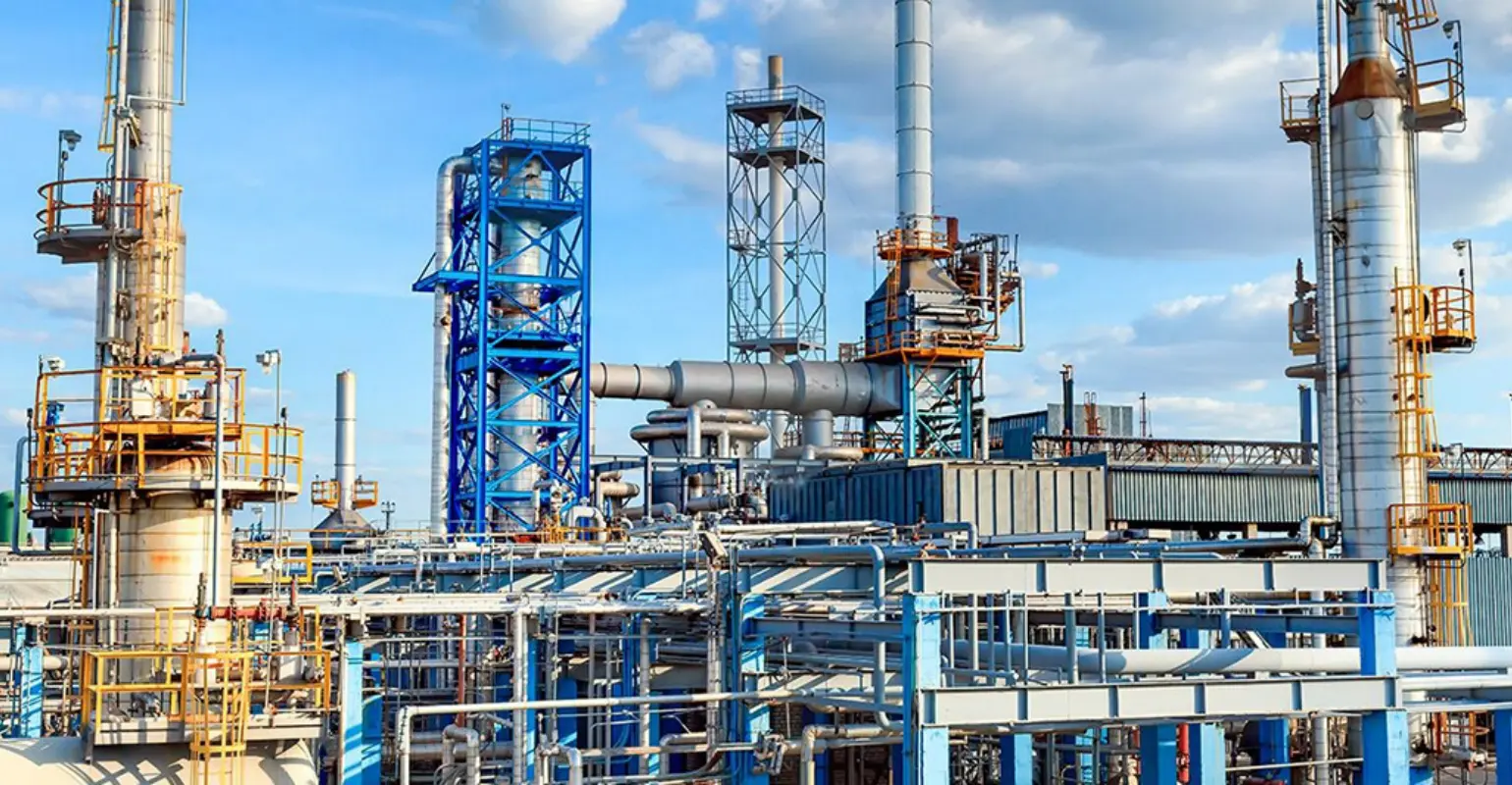
Petrochemical installations are subject to volatile chemical exposure, extreme temperature ranges, and continuous mechanical stress. Stainless steel grating offers essential properties for these sites:
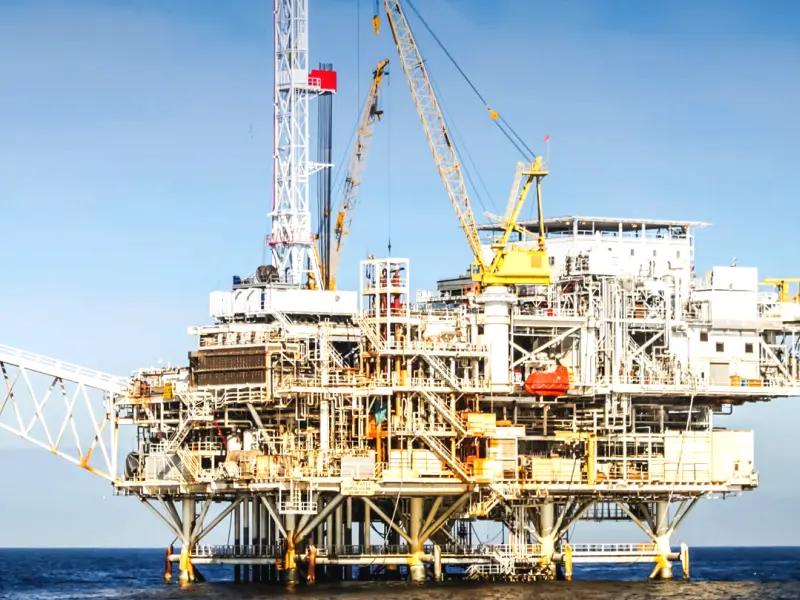
Offshore environments require high corrosion protection due to exposure to seawater, salt-laden sea fog, and high wind forces. Our marine-grade SS316L and duplex stainless steel gratings are designed for these settings:
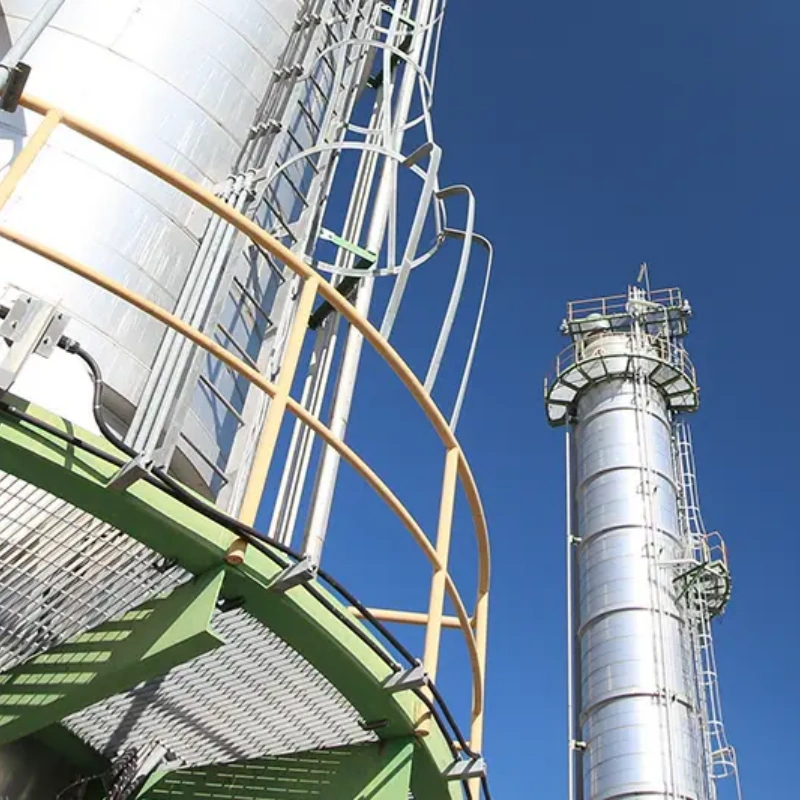
Sanitation, cleanability, and structural hygiene are paramount in pharmaceutical, food, and municipal water treatment plants. Stainless steel provides the optimal surface:
Your Trusted Partner for Precision Steel Structures and Global Supply Chain Solutions
Founded in 1993, Ningbo Jiulong Machinery Manufacturing Co., Ltd (NJMM) has grown to become a leading manufacturer in the steel grating and structural metal components industry. Integrating scientific research, precision engineering, automated manufacturing, and installation support, NJMM provides reliable solutions to clients worldwide.
We operate two modern production bases in East and North China, covering an expansive 450,000 square meters, including a dedicated 30,000 square meter workshop. Our facility operates 12 automated press-welding lines, alongside advanced production equipment such as robotic welders, high-precision laser cutters, and digital CNC panel layout tools. These systems allow us to maintain an annual production capacity exceeding 50,000 metric tons of premium steel structures, with more than 20,000 metric tons exported globally.
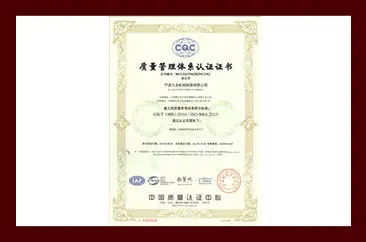
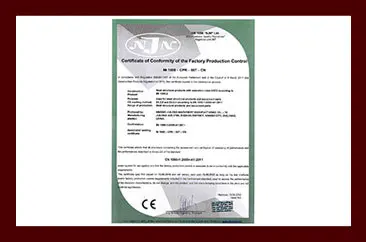
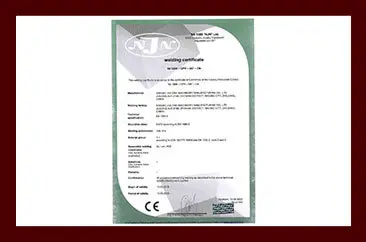
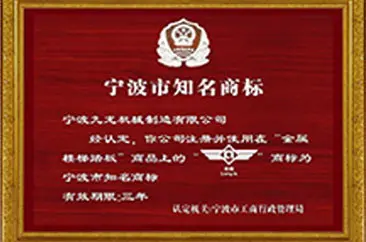
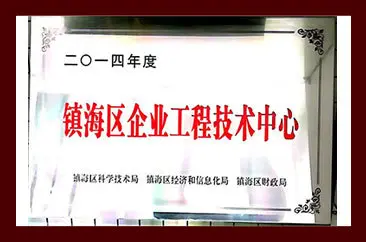
NJMM is committed to global standards of quality, safety, and environmental responsibility. We hold several international certifications, including the ISO9001:2015 Quality Management System Certification, ISO45001:2018 Occupational Health and Safety Management System Certification, and ISO14001:2015 Environmental Management System Certification, alongside CE and GOST marks. As a key contributor to the 2019 revision of the YB/T4001 industry standard, we continue to drive innovation, having been recognized as a National High-Tech Enterprise and a certified green factory.

How automation, material sciences, and digital design are transforming the industry
Transitioning from traditional materials to duplex and super-duplex stainless steels. These advanced alloys offer twice the mechanical yield strength of standard austenitic grades along with superior localized pitting resistance.
Replacing manual arc processes with high-frequency robotic pressure welding. This produces uniform, slag-free, and solid joints that prevent crevices where bacterial or galvanic corrosion can start.
Integrating 3D modeling with Building Information Modeling (BIM) workflows. Designers can export digital grating layouts directly to automated production machinery, ensuring exact dimensions for complex industrial layouts.
Key information to help engineers and procurement specialists make informed decisions
Grade 304 contains 18% chromium and 8% nickel, providing strong general-purpose corrosion resistance. Grade 316 includes 2% to 3% molybdenum, which protects against pitting and stress corrosion cracking in high-chloride, saline, and marine environments.
Selection depends on the distance between the supports (span) and the design load requirements. For standard pedestrian walkways (approx. 3-4 kN/m² uniform load) with a span of 1000mm, a 25x3mm or 32x3mm bearing bar size is typical. For heavy dynamic loads, a 40x5mm or larger bar size is recommended.
Forge-welded grating uses heat and pressure to fuse the crossbars and bearing bars into a single unit. This prevents loose joints and crevice corrosion, which can occur in mechanical, press-locked grating under heavy vibration or wet conditions.
Plain surfaces are easy to clean but can become slippery when wet. Serrated surfaces provide superior grip under wet, oily, or icy conditions, making them ideal for outdoor and offshore installations. Pickling and passivation treatments also remove impurities to enhance both corrosion resistance and surface grip.
Supplying certified industrial solutions in partnership with leading global engineering firms











Browse our core inventory. We provide custom engineering and fabrication services to match your specific layout drawings.
 Jiulong